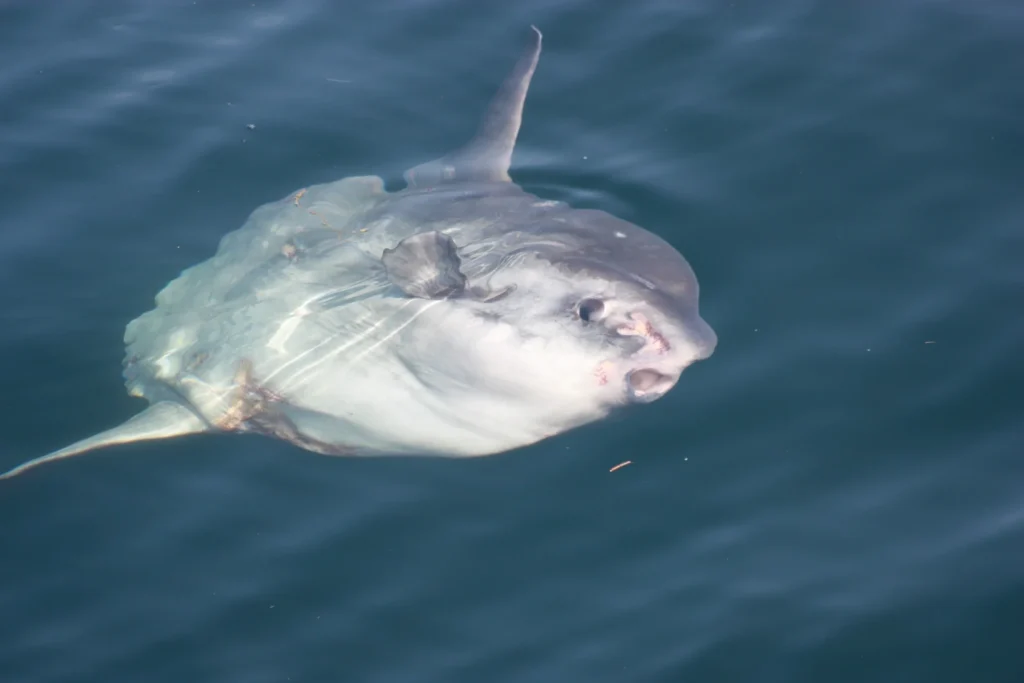
Imagine a giant, pancake-shaped fish drifting through the ocean, waving its tiny fins like it’s doing a goofy dance. Sounds silly, right? But this is a real fish! And not just any fish–it’s the biggest bony fish in the whole ocean! Meet the ocean sunfish, the one and only Mola mola. Alright, ocean explorers, you know the drill–grab your goggles, take a deep breath, and get ready to dive into the wild and wacky world of Mola molas! (Click here to watch our video about Molas!)
The ocean sunfish’s scientific name Mola mola comes from Latin and it actually means “millstone”-a big, round, heavy stone used for grinding grain. Why? Because Mola molas have a flat, circular shape, and gray, rough skin just like a millstone! Mola molas may be the largest of the five ocean sunfish species, but they don’t start off as giants. In fact, they begin life as tiny, spiky babies–smaller than a grain of rice. But, compared to most fish, ocean sunfish grow at record breaking speeds! In just 15 months, they can increase their weight by 60 times! Let’s take a look at this fast growing lifecycle:

Mola molas reproduce through a process called spawning, where a female releases millions of tiny eggs into the ocean and the male fertilizes them. Scientists believe a single female Mola mola can lay up to 300 million eggs-one of the highest egg counts of any fish! These eggs float freely in the water, drifting with ocean currents until they hatch. Do you know what they are considered at that point in their life? Zooplankton! An animal that is floating with the currents! Once hatched, baby Mola molas called larvae, are so small they could fit on your fingertip! These larvae are covered in tiny spines to help protect them from predators. As they grow, Mola mola larvae go through a process called metamorphosis–a big transformation that changes their shape and appearance. They lose their spines and develop their unusual pancake-like bodies. Their tiny fins start flapping, and before long, they become juvenile fish. Juvenile sunfish grow at an astonishing rate. Mola molas can gain over 5 pounds a day and by the time they are fully grown, they can weigh more than 5,000 pounds–as heavy as a pickup truck!
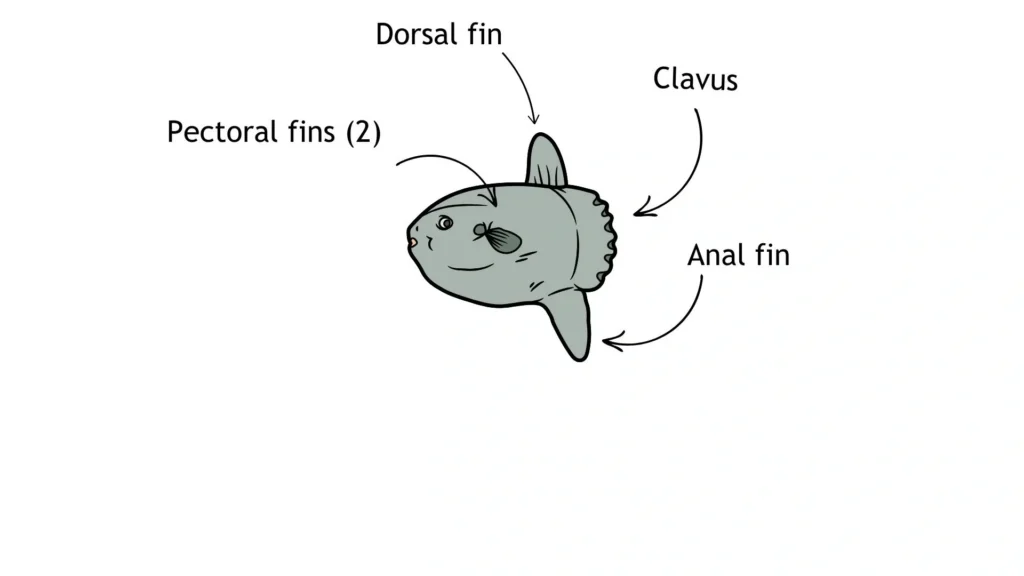
If that didn’t surprise you, here’s another wild fact: ocean sunfish don’t have tails! Instead of a tail, they have a fin called a clavus, which helps them steer through the water. While most fish use their tails to swim, but Mola molas use that big pectoral fin and anal fin to move through the water. Their pectoral fins as well as the calvus help them glide and turn. Despite their enormous size, their mouths are surprisingly small compared to their bodies. They mostly eat small jellies like comb jellies, which are about the size of an egg. Do you remember a marine reptile species we discussed that also loves to eat jellyfish? Mola molas will also eat small fish, squid, and zooplankton.
Ocean sunfish are found in temperate and tropical oceans all around the world. Oftentimes they are found basking and floating at the surface, especially on sunny days. But it’s not because they are lazy–there’s a good reason for it. Basking in the sun helps warm them up. Mola molas are cold-blooded, meaning they can’t regulate their body temperature the way warm-blooded animals can. So, by floating near the surface and soaking up some sunlight, they get the warmth they need to help their bodies stay active and function well in the cooler deep waters.
In the Gulf of Maine, ocean sunfish can grow quite large, though they are generally on the smaller side compared to some of the huge individuals found in warmer waters. These ocean sunfish can be identified individually by their unique features such as the shape of their pectoral fins, dorsal fin, and the distinctive scarring or marks on their bodies. The Whalemobile team sees ocean sunfish often on their whale watches during their seasons and will sometimes even see them breach. Mola molas are known to breach the surface of the water as a way to shake off parasites. Ocean sunfish can become infected with 40 different kinds of parasites! Yikes! Luckily, small fish and birds will help feast on these parasites, and this is called a mutualistic relationship–because both the ocean sunfish and the fish or birds benefit. Some of the biggest threats to the ocean sunfish in the Gulf of Maine are getting entangled in fishing gear or being hit by boats. Do some research and email us your thoughts on what we can do to protect these ocean giants!
Check out Mola mola research that is done in the Gulf of Maine headed by Krill Carson through New England Coastal Wildlife Alliance (NECWA).
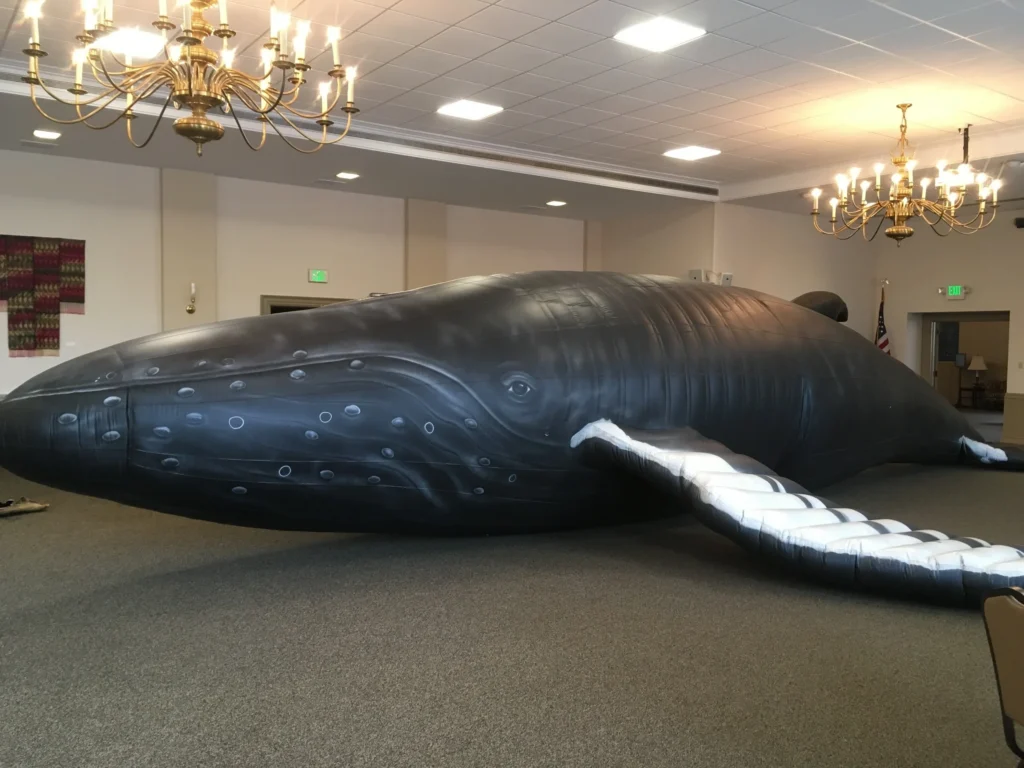
At The Whalemobile, we believe people protect what they understand—so we bring ocean science to life through stories, hands-on learning, and by bringing a life-sized whale in schools and libraries. To learn more about our programs, visit our website at www.thewhalemobile.com.