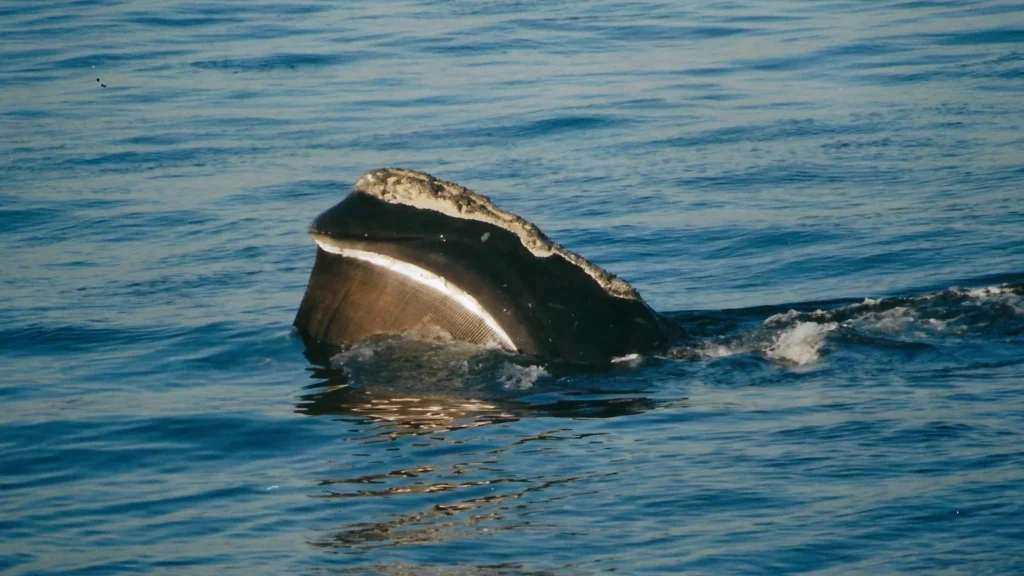
This week we are going to learn about the right whale to love–the North Atlantic right whale! Of course, we love all whales, but this one has a unique name with a sad history.
More than a thousand years ago, people began hunting right whales. Why? Because they were considered the “right” whale to kill—they swam slowly, stayed close to shore, and floated after being killed. Whalers saw them as the ideal target, using their blubber for oil and their baleen for corsets, brushes, and umbrellas. Sadly, relentless hunting continued into the early 1900s, pushing the species to the brink of extinction.
Today, the North Atlantic right whale is critically endangered, with only about 370 individuals remaining. But there is hope! As one of our favorite quotes reminds us: “In the end, we will conserve only what we love. We will love only what we understand. And we will understand only what we are taught.” — Baba Dioum.
So let’s dive deep into the world of the North Atlantic right whale—because the more we learn, the more we can love and protect these gentle giants.
North Atlantic right whales (Eubalaena glacialis) are unique among whales in our area because of their physical characteristics.
1. Coloration: They are mostly black in coloration, though some have irregular white patches on their bellies.
2. Their massive heads: One of their most striking features is their head, which makes up about one-third of their total body length! These whales can grow to be over 50 feet long (that is a little bit longer than a full sized school bus).
3. Blubber: North Atlantic right whales have a very thick blubber layer–up to 12 inches thick! This thick fat layer makes them positively buoyant, which means they naturally float in the water instead of sinking (think of them having a built in life-jacket).
4. Flippers: Right whales have paddle-shaped flippers, which they use to steer and glide through the water.
5. Dorsal Fin? They don’t have a dorsal fin, making their backs look smooth and curved when they swim.
6. Blow: One of the many cool things about right whales is their V-shaped blow or ‘spout.’ When they come to the surface to breathe, their exhalation or blow often looks like the letter V!
7. Callosiities: Have you ever played on the monkey bars and gotten a callous on your hands? North Atlantic right whales have something similar–big, rough bumps on their heads called callosities. These thick, irregular raised patches of skin can be found above their eyes, behind their blowhole, lower lips, chin, and rostrum (top of their head). Callosities are naturally gray in color, but they appear yellow or white because tiny crustaceans called cyamids (whale lice) live on them. Callosities are super important because each whale has a unique pattern, just like a fingerprint! Scientists use these special markings to identify individual right whales and track them throughout their lives. So, just like no two people have the same fingerprints, no two right whales have the same callosity pattern!
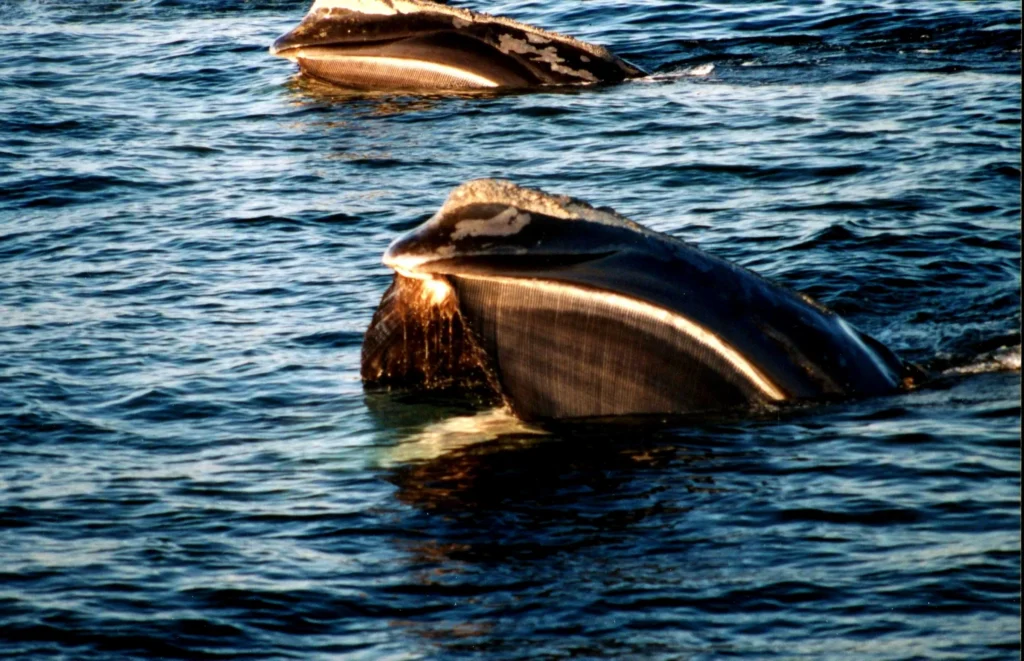
8. Baleen: Going back to their giant heads, North Atlantic right whales have very long baleen plates that can be up to 6-8 ft long. And guess what they LOVE to eat? Tiny zooplankton called copepods! These whales particularly enjoy feeding on Calanus finmarchicus–a copepod species about the size of a grain of rice. Imagine how many copepods these giant whales have to eat! Because their food is so small, the hair on the inside of the baleen feels like the hair on the top of your head! To catch their food, right whales use a special technique called skim feeding. Instead of lunging like other baleen whales, they swim with their mouths open, letting water pass through their baleen as they move, while the copepods get trapped on the inside of those incredibly long baleen plates. Eventually they pause and swallow all the copepods that were trapped by their baleen.

Every year, some of these whales migrate between their feeding and calving grounds. In the spring and summer, they travel to cooler northern waters, like Cape Cod Bay and the Southern Gulf of Maine. In more recent years, a third of the population is sighted every summer and fall in the Gulf of the St. Lawrence. In the fall and winter, some females will migrate south to warmer waters off the Southeastern U.S., near the Carolinas, Florida, and Georgia, where they give birth to their calves. Remember we said that right whales were critically endangered? Scientists believe that there are fewer than 70 reproductive females left in the population, which means there aren’t as many babies being born. Right whales are also having calves later in life and less often, making it harder for their population to increase.
Sadly, the biggest danger to right whales still comes from humans. About 85% of right whales have been entangled in fishing gear at least once in their lives. 50% at least twice. Right whales are also prone to ship strikes. Because they swim near the surface and don’t have dorsal fins, they can be hard for ships to see. The good news is that people are working really hard to protect them by creating safer fishing gear and slowing down ships in areas where right whales are found. If these North Atlantic right whales went extinct and were removed from the ocean’s food web, what do you think would happen? Email us your answers!
Allison Henry, a friend of ours at The Whalemobile, is one of the leading scientists working to understand serious injury and mortality in right whales. Check out this article about her important work doing aerial surveys to study these animals.
There is an incredible amount of information about right whales available to the public through the Right Whale Consortium. In 2020, The Whalemobile helped create some lessons for middle school or high school students about right whales.
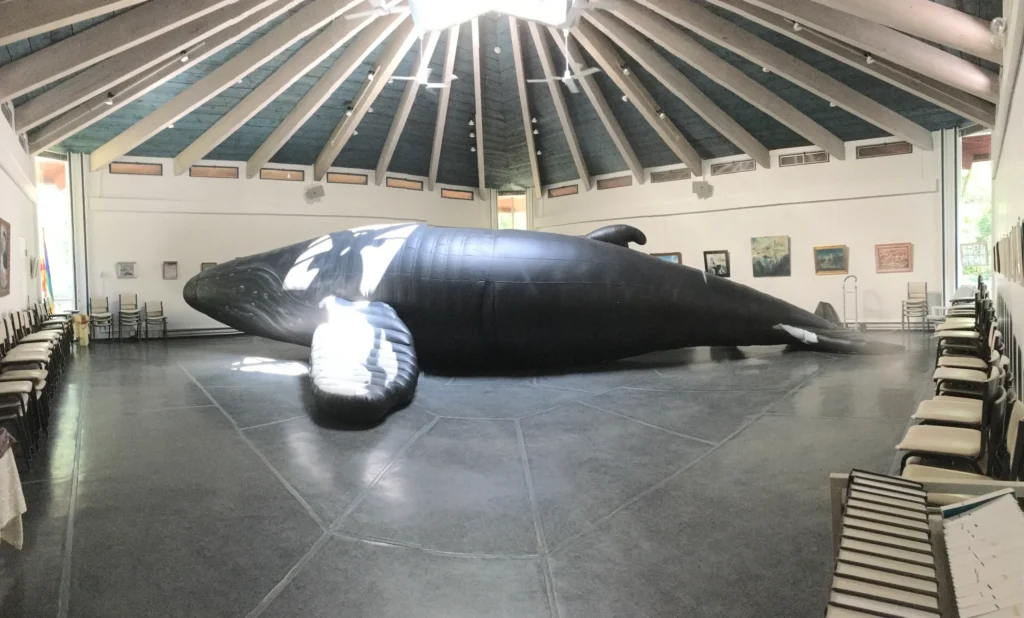
At The Whalemobile, we believe people protect what they understand—so we bring ocean science to life through stories, hands-on learning, and by bringing a life-sized whale in schools and libraries. To learn more about our programs, visit our website at www.thewhalemobile.com.