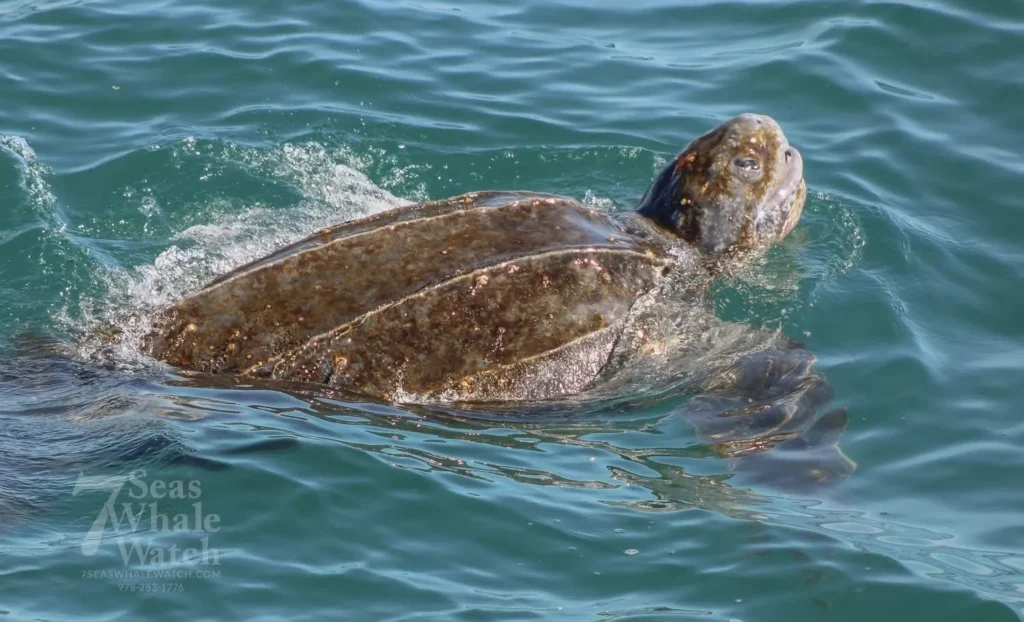
Why did the sea turtle cross the ocean? To get to the jellyfish buffet on the other side!
Isn’t it crazy that large sea turtles can survive off of jellyfish? Let’s back up a little and introduce our animal this week before we dive into the details.
The leatherback sea turtle is the largest of all sea turtles, reaching lengths of up to seven feet and weighing as much as 2,000 pounds–that’s about the size of a small 4-door car. Unlike other sea turtles, leatherbacks lack a hard shell; instead, their backs are covered by a thick, leathery skin with ridges that help streamline their movement through the water. This leathery skin is how they got their scientific name, Dermochelys coriacea. It translates to “leathery-skin turtle”.
Leatherbacks are an animal of extremes. They are deep divers–capable of reaching depths of over 4,000 feet. That means they can hold their breath for up to 2 hours if needed. Thanks to their flexible shell and ability to slow their heart rate, they conserve oxygen as they plunge into the depths of the ocean.
One of the most distinctive features of the leatherback is the pink spot on the top of its head called the pineal spot. This unique structure is believed to help the turtle sense light and possibly play a role in navigation. Scientists also speculate that it may help leatherbacks detect seasonal changes and guide them during their long migrations across the ocean.

A Year in the Life of a Leatherback
A leatherback sea turtle’s year is one of incredible journeys and survival. During the winter months, females that have reached sexual maturity—between 12 and 15 years of age—return to tropical and subtropical beaches, such as those in the Caribbean and Florida, to lay their eggs. They nest multiple times per season, each time depositing around 80 eggs in sandy nests before returning to the ocean. After approximately two months, hatchlings emerge and make their way to the water, where only a small fraction will survive into adulthood.
As spring arrives, leatherbacks begin their long migration northward, following ocean currents such as the Gulf Stream in search of abundant jellyfish. By late spring through early fall, they can be found off the East Coast of the United States, with frequent sightings in North Carolina, Virginia, New Jersey, and Massachusetts. The warm summer waters of Cape Cod and the Gulf of Maine provide excellent feeding grounds, where they gorge on jellyfish to build up energy reserves for their next migration.
As temperatures cool in the fall, leatherbacks start their journey back toward tropical waters, traveling thousands of miles once again. These cycles of migration and reproduction continue throughout their lifespan, which ranges from 30 to 50 years, though some individuals may live even longer in the wild.
As a keystone species in marine ecosystems, leatherbacks play a vital role in regulating jellyfish populations. As we have said, their primary diet consists almost entirely of jellyfish. It’s hard to imagine that jellyfish could sustain a large animal like this isn’t it, but they eat about 2000 pounds worth of jellies a day? At that rate, their voracious appetite helps prevent jellyfish blooms, which could otherwise disrupt oceanic food webs.
Despite their size, leatherbacks have relatively few natural predators, though hatchlings are vulnerable to seabirds, crabs, and fish. As adults, their main threats come from orcas and large sharks—but really the most significant danger they face is human activity, including plastic pollution, fishing gear entanglement, and habitat destruction.
Protecting Leatherbacks for the Future
Leatherback sea turtles have survived for over 100 million years, but their future is increasingly uncertain due to climate change, particularly rising temperatures that affect their reproduction. The temperature of the sand where leatherbacks lay their eggs determines the sex of the hatchlings—warmer sand produces more females, while cooler sand results in more males. With global temperatures on the rise, this imbalance could lead to a shortage of males, threatening the long-term stability of the population. Conservation efforts, including shaded nesting areas, turtle excluder devices on fishing gear, and public awareness campaigns, are vital to ensuring that leatherbacks continue to roam our oceans. By supporting organizations that work to protect sea turtles and reducing plastic waste, we can all play a role in preserving these gentle giants for future generations.
Scientist Spotlight: Dr. Kara Dodge
Dr. Kara Dodge, a marine biologist with the New England Aquarium’s Anderson Cabot Center for Ocean Life, is one of the leading scientists studying leatherback sea turtles. Her research focuses on tracking their movements, foraging behavior, and interactions with fisheries. By using satellite tagging technology, Dr. Dodge and her team are uncovering critical information about how leatherbacks navigate vast oceanic distances and how they respond to environmental changes. Her work is essential for informing conservation strategies that protect these ancient mariners from human-caused threats.
Stay tuned for more insights into our ocean’s incredible inhabitants in our weekly food web series!
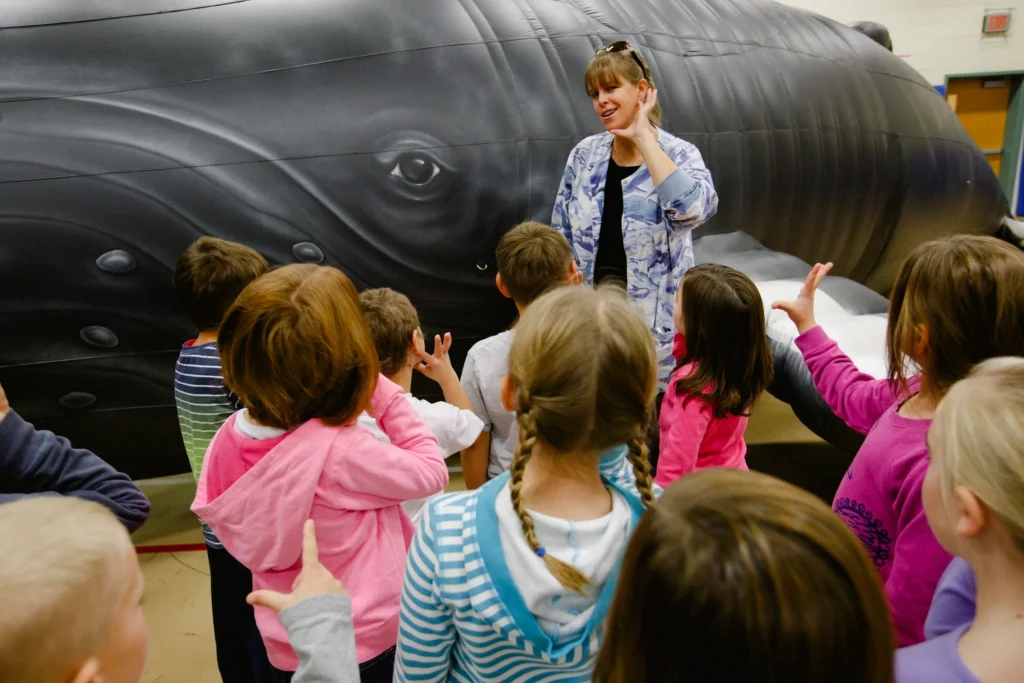
At The Whalemobile, we believe people protect what they understand—so we bring ocean science to life through stories, hands-on learning, and by bringing a life-sized whale in schools and libraries. To learn more about our programs, visit our website at www.thewhalemobile.com.