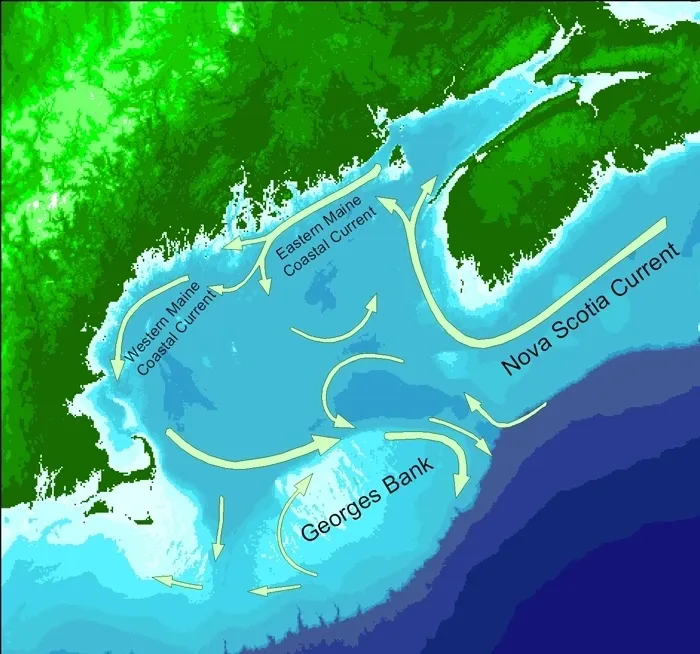
Welcome back ocean advocates and explorers! While we’ve learned a lot about the incredible animals that call the Gulf of Maine home, it’s equally important to understand the Gulf itself and how its unique environment has such diverse and thriving ecosystems.
To begin, what exactly is a gulf? A gulf is like a giant “ocean bowl” where the water is surrounded by land on three sides. Imagine a big scoop of ice cream in a bowl–the ice cream is the water, and the bowl is the land. The open part of the bowl is where the ocean connects to the bigger sea. The Gulf of Maine is one of these special “ocean bowls,” and it’s filled with amazing animals like whales, dolphins, fish, sharks, seals, birds and invertebrates, who come to swim and find food! It is a sheltered place, where lots of ocean life thrives, just like how food in a bowl stays contained and easy to reach.
Now that we have a better understanding of what a gulf is, it is important to remember that this “ocean bowl” is still giant. The Gulf of Maine is really big–about 36,000 square miles! To help you imagine how big that is, picture 60,000 football fields lined up side by side! It’s an enormous body of water that stretches from Cape Cod, Massachusetts all the way up to the Bay of Fundy in Canada.
The Gulf of Maine has a unique topography, meaning the shape of the ocean floor. Underneath the water, there are shallow areas called banks and ledges, where the land rises up from the deep ocean. These underwater bumps slow down ocean currents and bring nutrients up to the surface in a process called upwelling, creating the perfect feeding grounds for fish, whales, and other sea animals. In fact, the Gulf of Maine is so productive, it is home to over 3,000 marine species and birds!
The Gulf of Maine is one of the most amazing places for whale watching. Places like Stellwagen Bank, Jeffreys Ledge, Bar Harbor and the Bay of Fundy. Some of these areas are extra special because they are marine protected areas, and Stellwagen Bank is also a marine sanctuary. But what exactly do these terms mean, and why are they so important for the ocean and its creatures? Let’s dive in!

What is a Marine Protected Area?
A marine protected area (MPA) is a general term for any body of water with legal protection–usually on human activity. The habitats and the marine life within an MPA are offered protection from a variety of things. MPAs can be designated by states and localities as well as the federal government. It’s a place where ocean life is carefully managed and kept safe. In a marine protected area, some activities like fishing or boating may be limited, but people can still visit and enjoy the area. These areas help keep the ocean ecosystem healthy by providing spaces for marine animals to live and grow.
What is a National Marine Sanctuary?
Have you ever been to a National Park like the Grand Canyon or Acadia in Maine? A National Marine Sanctuary (NMS) is like an underwater national park. It’s a area of the ocean that is protected for its natural, cultural or historical significance. Because it has the word National in it, you might figure out that these spaces are designated by the federal government. There are 15 National Marine Sanctuaries and 2 National monuments in the United States. In 1992, Stellwagen Bank National Marine Sanctuary was declared the 14th NMS. Stellwagen Bank is protected from drilling, dredging and dumping–all things that would destroy the Bank itself, which is the reason the ecosystem is the way it is. Each Sanctuary has different protections based on the local area. Scientists often study the area to learn more about how to take care of our oceans and provide educational resources for people who visit the sanctuaries.
Although parts of it are protected, The Gulf of Maine is one of the fastest warming bodies of water on the planet, which means the ocean is getting warmer much quicker than most other parts of the world. This is a big challenge for the animals that live there, like whales and fish, because they rely on cooler waters to survive. But here’s the good news: there are things we can all do to help! By using less energy, reducing waste, and taking care of nature, we can slow down the warming of the ocean and protect the animals that depend on it. When we work together to keep our planet healthy, we can make a real difference! What small change can you make today to help keep the Gulf of Maine cool and safe for the animals that live there?
Read about Jocelyn Runnebaum and her research efforts to protect the ecological health of the Gulf of Maine.
Gulf of Maine photo credit: https://maineanencyclopedia.com/gulf-of-maine/
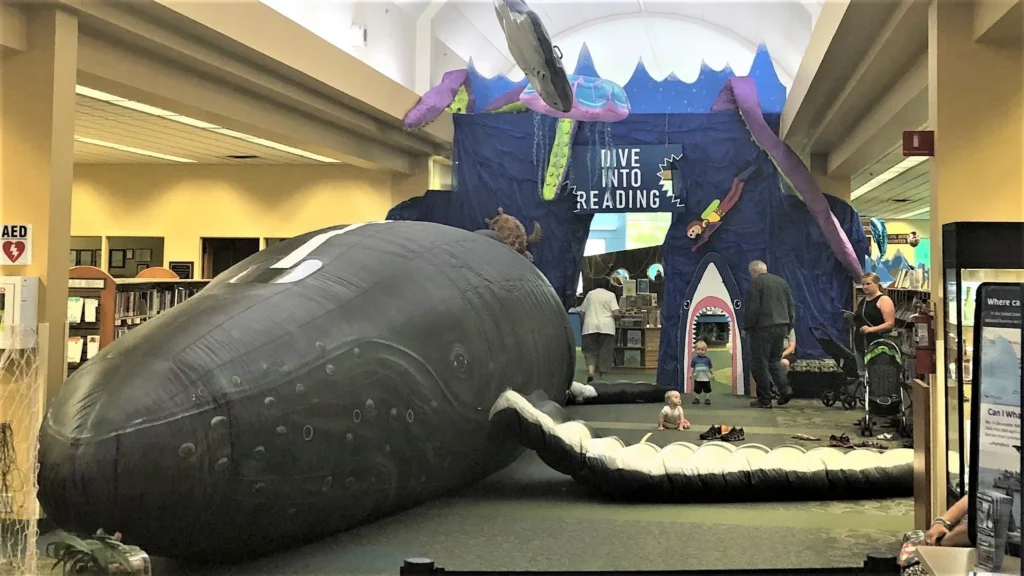
At The Whalemobile, we believe people protect what they understand—so we bring ocean science to life through stories, hands-on learning, and by bringing a life-sized whale in schools and libraries. To learn more about our programs, visit our website at www.thewhalemobile.com.