
If you’ve made it this far in our blog posts, you may have noticed that the topic each week has helped us form a food chain. A food chain is a way of showing how energy and nutrients move through an ecosystem. At this point, we know that energy flows from the sun to phytoplankton, then up through each level of animals (zooplankton to schooling fish to whales). Now we are going to add more animals seen in the Gulf of Maine, in order to build a food web. So, let’s get into it and talk about Atlantic white-sided dolphins.
When you think about where dolphins live, what type of habitat do you immediately think of? Do images of sunlit oceans and warm tropical waters come to mind? For most people, this may be the case. In fact, most people are surprised when they find out that there are different dolphin species sometimes seen in our own backyard here off the coast of Massachusetts.
Atlantic white-sided dolphins (Lagenorhynchus acutus) get their common name from the distinct white patch along each side of their body, which stands out against their darker back and lighter belly. This white marking, combined with a yellow-tan stripe above it, makes them easy to identify and unique among dolphin species. This species is endemic to the North Atlantic, meaning they are only found in that region.

Atlantic white-sided dolphins belong to the family Delphinidae, which includes all oceanic dolphins. This family is the largest in the cetacean group and is known for its variety of species, from bottlenose dolphins to killer whales. What makes Atlantic white-sided dolphins part of the Delphinidae family is a set of unique characteristics shared by these dolphins:
- Teeth adapted for gripping: They have conical shaped teeth (like your eye teeth) suited for gripping and catching prey like fish and squid, which they swallow whole. Atlantic white-sided dolphins have around 30-40 sharp teeth on each side of their jaws for this purpose.
- Echolocation Abilities: Like all toothed whales, Atlantic white-sided dolphins use echolocation–emitting sounds and listening for the echoes that bounce back–to navigate and find their prey.
- Dorsal fins & streamlined bodies: Dolphins in this family have a sleek, streamlined body shape and distinct dorsal fin that helps them move with speed and agility through the water. This species has a tall, curved dorsal fin that allows for fast swimming and maneuverability.
- Highly social behavior: Dolphins in the Delphinidae family are very social, often forming pods. The average pod size for Atlantic white-sided dolphins in the Gulf of Maine is 52 individuals, although we have seen pods as small as 5-10 individuals and pods as big as hundreds or more.
- Intelligence & communication: Members of this family are among the most intelligent marine animals, with complex social structures and communication. Atlantic white-sided dolphins communicate with each other through a variety of clicks, whistles, and body movements. Individual dolphins are known to produce high frequency signature whistles. Do dolphins use those like we use our names? Click here to listen to the sounds they make.
In the Gulf of Maine, Atlantic white-sided dolphins are oftentimes spotted alongside other marine wildlife–like the humpback and finback whales. They are likely feeding on the same schooling fish! In our previous years of whale watching, Atlantic white-sided dolphins were seen occasionally by the Whalemobile Team (10-30% of our trips). In 2024, the Whalemobile Team saw these dolphins on MORE THAN HALF of our trips from April-October. Why do you think we had more dolphin encounters this year as compared to previous years? Email us at team@thewhalemobile.com is you have some ideas!
Another big event that happened this whale watching season was that over 120 Atlantic white-sided dolphins stranded in Wellfleet, Massachusetts in late June. Click here to read more! Fortunately, over 100 were saved, tagged, and released. Stay tuned for our video that discusses our season with the Atlantic white-sided dolphins, and how we even saw tagged ones that were rescued from the stranding event!
More Resources:
Check out Dr. Tammy Silva’s research with Atlantic white-sided Dolphins in the Gulf of Maine.
Check out our video about Atlantic white-sided dolphins!
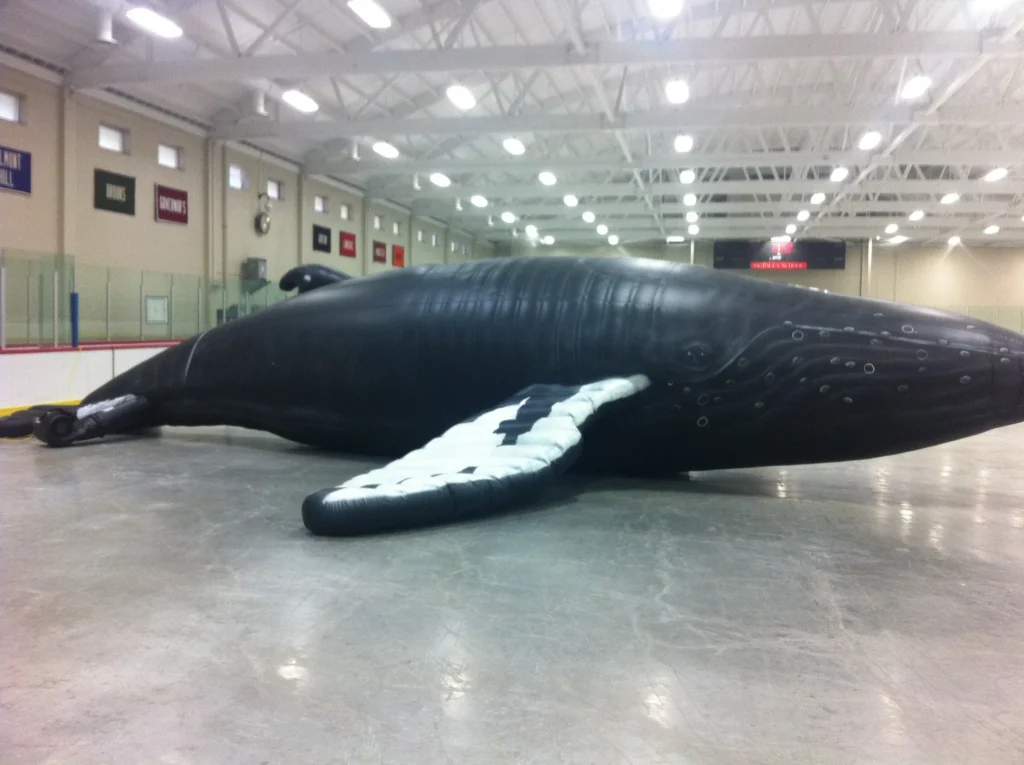
At The Whalemobile, we believe people protect what they understand—so we bring ocean science to life through stories, hands-on learning, and by bringing a life-sized whale in schools and libraries. To learn more about our programs, visit our website at www.thewhalemobile.com.