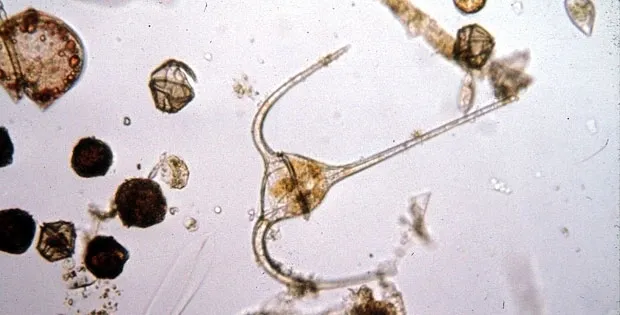
What if we told you that EVERY OTHER breath you take is thanks to the phytoplankton in the ocean? These tiny organisms create over 50% of the planet’s oxygen. They do photosynthesis much like plants do on land. Floating near the surface of the ocean, phytoplankton use sunlight, carbon dioxide and water to create energy in the form of sugar and release oxygen. They also form the basis of the food web in the ocean.
So what exactly is phytoplankton? Phytoplankton, derived from the Greek words phyto meaning “plant” and planktos meaning “drifter” or “wanderer,” refers to the microscopic, photosynthetic organisms that live in the sunlit upper layers of oceans, seas, and freshwater bodies. Although these microscopic drifters of the sea are some of the most essential organisms on Earth, they often go unnoticed.
There are thousands of phytoplankton species, divided into several main types including diatoms, dinoflagellates, coccolithophores, and cyanobacteria. Each of these groups plays a different role in marine ecosystems and carbon cycling. Diatoms, for instance, are known for their silica-based cell walls and thrive in nutrient-rich waters such as the Gulf of Maine, while coccolithophores have calcium carbonate shells that sink to the ocean floor when they die, helping to sequester carbon for long periods.

Serving as the primary producers that fuel the entire marine food web, they are eaten by zooplankton (such as the copepods and krill), which are then eaten by schooling fish and whales. The Gulf of Maine, where The Whalemobile Team studies whales, is home to a diverse and abundant population of phytoplankton, which plays a key role in sustaining its rich marine life. The primary types of phytoplankton in this region include diatoms and dinoflagellates, which thrive in nutrient-rich waters brought by currents and seasonal upwellings. These tiny organisms make waters in the Gulf of Maine look green, because of the pigment chlorophyll inside the phytoplankton–just like the plants on land!
Although whales do not consume phytoplankton directly, they play a crucial role in enhancing phytoplankton productivity through their poop, which is rich in nutrients like nitrogen and iron. When whales defecate (often at the surface), they fertilize the surrounding waters, promoting phytoplankton blooms that are essential for sustaining the entire marine food chain. This process is often referred to as a “whale pump,” and illustrates how the health of whale populations is intricately tied to the abundance of phytoplankton and health of the ocean food web.
Now that you’ve learned about phytoplankton, it is time to learn our favorite rhyme:
We need whales because they poo,
they help make oxygen for me and you!
Check out our video about phytoplankton HERE!

At The Whalemobile, we believe people protect what they understand—so we bring ocean science to life through stories, hands-on learning, and by bringing a life-sized whale in schools and libraries. To learn more about our programs, visit our website at www.thewhalemobile.com.