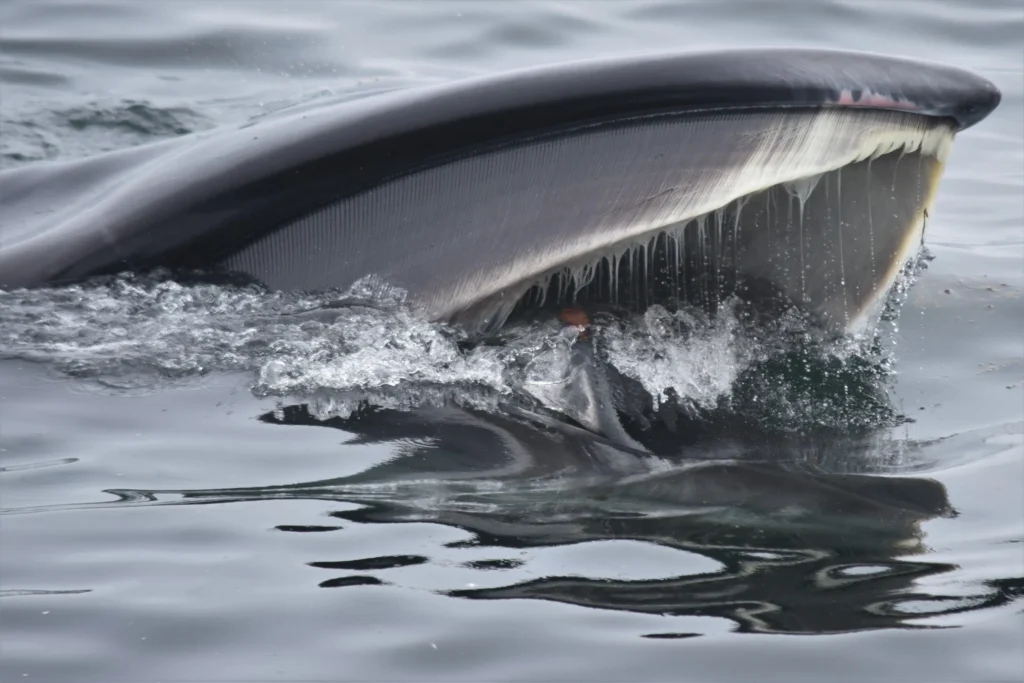
Hold onto your hats because we are about to race through the ocean with one of the speediest creatures around–-the sei whale (pronounced “say” whale)! You might not have heard of these incredible marine mammals before because little is known about them, but get ready to be amazed! When it comes to being big and fast, the sei whale is the true champion!
Not only do they take home third place for being the one of the fastest creatures in the ocean, but they also snag third place for being one of the longest whales around. Ready to learn more? Let’s dive in!
As previously mentioned, the sei whale (Balaenoptera borealis) is one of the biggest whales in the ocean, coming in third place for length behind the fin and blue whales. These incredible creatures can grow over 60 feet long–that’s longer than a school bus–and can weigh up to a whopping 100,000 pounds! With a burst of energy they can reach speeds of up to 34 mph (runner up to the orca and common dolphin)! The sei whale got its name from the Norwegian word “sej,” which means pollock (a type of fish), where they were often seen together in Norway.
Sei whales live in all oceans around the world, from the chilly Arctic to warmer tropical waters. However, they are most abundant in temperate waters, especially in mid-latitude zones and prefer deep waters far from the coast.
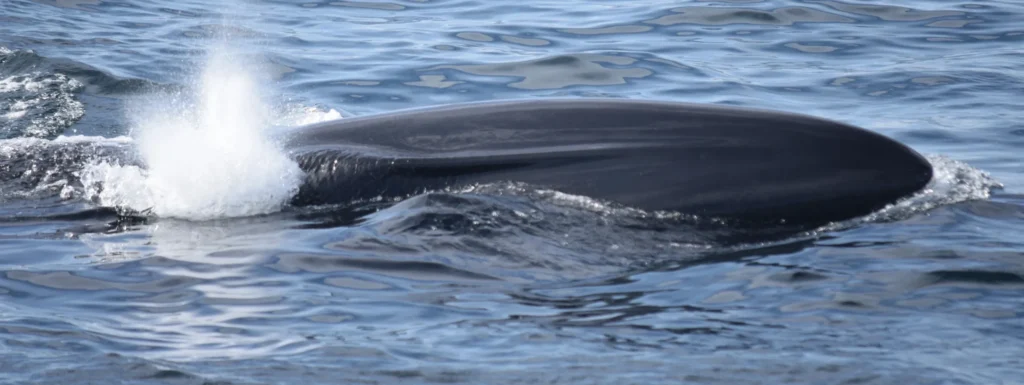
For a long time, they were often confused with Bryde’s whales because they look pretty similar! One big difference is in their rostrum (their head). Sei whales have one long longitudinal ridge on their rostrum, while Bryde’s whales have three ridges.
When it comes to their color, sei whales are mostly a dark gray or blue-gray color, with a lighter belly. Does this description of their coloration ring a bell? You got it…we just described countershading! On each side of their bodies you might spot pale brushstrokes-light streaks that add to their smooth appearance. Sometimes these whales have a U-shaped chevron pattern on their backs, similar to markings seen on fin whales. Their tall, hooked dorsal fins are a little less than ⅔ of the way along their back and they have a relatively small fluke. Now here is something interesting–sei whales can sometimes look a bit pockmarked (scars that look like indentations or holes in skin). These scars are due to bites from cookie cutter sharks and lampreys!

Sei whales have a diverse diet and what they eat can change depending on where they live and what’s available in the waters around them. These giants love to munch on tiny creatures such as copepods and krill, but in some areas they’ll also feast on schooling fish and even squid! When it comes to feeding, sei whales have two main ways of getting their food: skim feeding and lunge feeding. Do you remember learning about these feeding techniques from previous blog posts? Sei whales are part of a special family of whales called rorquals. Rorquals have pleats on their throats, which allow their mouths to expand like a giant balloon when they feed. This helps them scoop up more food at once, which is great because these whales need to eat a lot to fuel their massive size!
Even though sei whales are elusive and can be hard to spot, The Whalemobile team has been incredibly lucky to see many of them in feeding frenzies in the Gulf of Maine! These exciting moments have happened when sei whales have joined other whale species to feast on big schools of fish, krill, and or copepods. Can you guess which other whale species we saw with them? These sightings are rare and extra special because sei whales are hard to find–so much is still unknown about them. They are currently listed as an endangered species, and there are only about an estimated 80,000 sei whales left in the world.
But don’t worry yet–-every time we learn more about these amazing creatures, we can take a step toward protecting them for future generations. And you can help too! Whether it’s learning more about ocean animals, sharing facts with your friends, or supporting ocean conservation efforts, you’re part of the journey to keep these incredible whales swimming in the sea!
Check out this video of Ocean alliance successfully tagging a sei whale mother/calf pair.
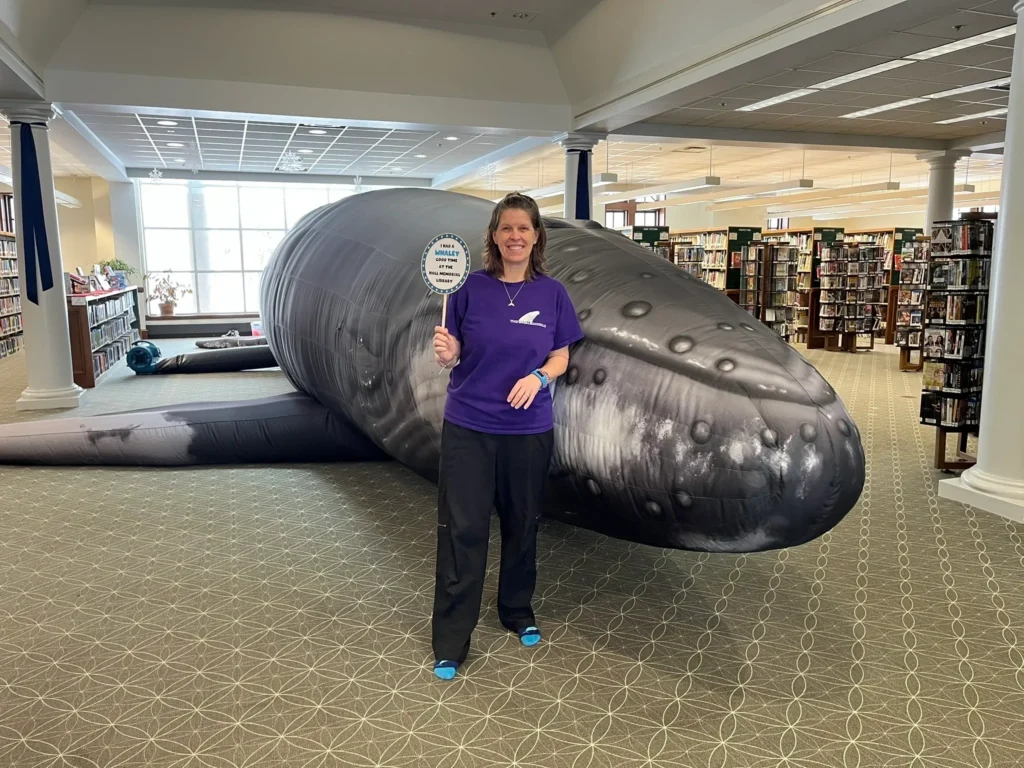
At The Whalemobile, we believe people protect what they understand—so we bring ocean science to life through stories, hands-on learning, and by bringing a life-sized whale in schools and libraries. To learn more about our programs, visit our website at www.thewhalemobile.com.