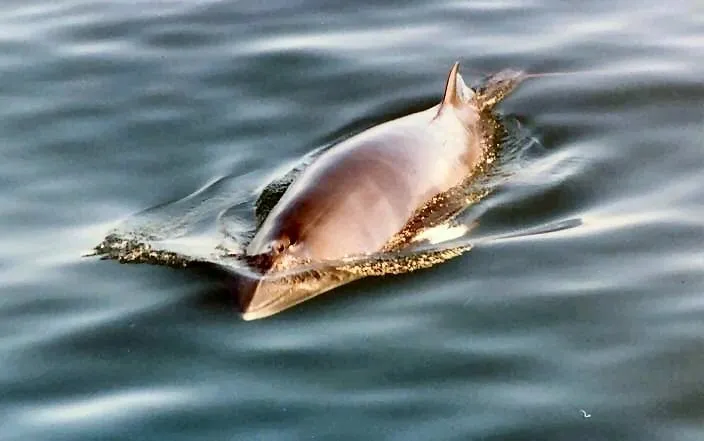
Welcome back ocean explorers, and happy March! Our whale watching season is just around the corner, and we are counting down the days until we see whales again. Have you ever wondered how we tell people apart? Maybe it’s by their hair, eyes, skin, height or clothes they wear. But wait–whales don’t wear clothes! However there is one species of whale that we like to say looks like they are wearing “mittens.” Ever heard of minke mittens? No worries if you haven’t! Let’s dive into learning about one of the most abundant whales in the world–the minke whale!
Minke whales (Balaenoptera acutorostrata) are often called “common minke whales” to distinguish them from their Antarctic cousins. How they got their name is a funny story! Minke whales are the smallest of rorqual species and the second smallest baleen whale (just behind the pygmy right whale). But here’s the fun part. They are named after the German whaler named Meincke, who kept mistaking minke whales for the much larger blue whales! That is pretty silly because we know blue whales are the largest animal on the planet, stretching up to 100 feet long–that’s about the length of three school buses! Minke whales, on the other hand, are much smaller, only growing up to 35 feet long, which is less than the length of a single school bus.
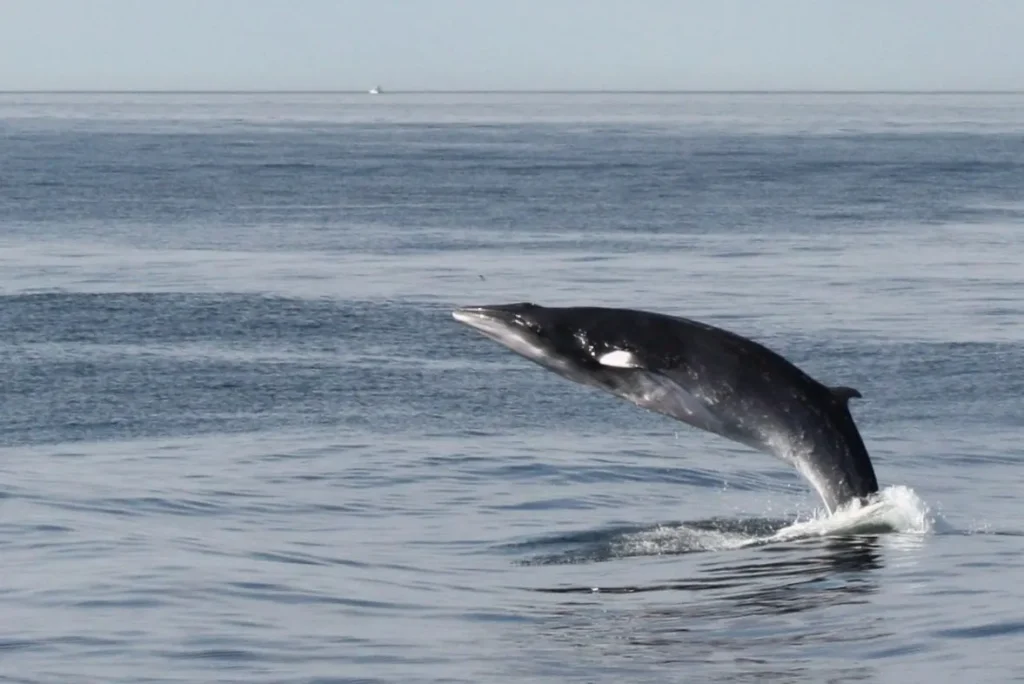
Here in the Gulf of Maine we often refer to minke whales as “shooting stars” because they appear so quickly and vanish so fast. These elusive whales can weigh up to 20,000 pounds and sometimes they’re even mistaken for dolphins by passengers! Minke whales are sleek and streamlined, with a dark grey to brownish-grey topside and white underside. Their sides and back are a lighter grey, and they have a pale streak behind their flippers, along with chevrons on their backs. Do you remember another whale species that has a chevron pattern on its back? They also have a narrow, pointed “V” shaped rostrum, a tall, hooked dorsal fin, and ** drum roll please** their famous bright white bands on their flippers, which we lovingly call “minke mittens!”

Due to their small size, the exhalation or “blow” from minke whales isn’t very distinct, making it easy to miss. Minke whales are typically solitary, but sometimes you might spot them with others. Like other baleen whales we’ve learned about, minke whales migrate seasonally, but the individuals that we see in the Gulf of Maine–we aren’t sure where they go. They reach sexual maturity between 3 and 8 years old, and females can have calves every year! However, it is rare to see mother-calf pairs here in the Gulf, as these pairs are usually found in warmer, lower latitudes.
Minke whales have baleen that’s a whitish or yellowish color, and they are opportunistic feeders. In the Gulf of Maine, their diet mainly consists of schooling fish, crustaceans, and zooplankton. Minke whales are lunge feeders and their typical dive time ranges from 3-10 minutes. When we spot minke whales, it is often a sign that other whale species might be nearby, thanks to the abundance of prey in the area. In fact, the minke whale is one of the three most common whale species spotted in the Gulf of Maine along with the fin and humpback whales!
And there you have it, ocean explorers! Minke whales may be small, speedy, and a little elusive, but they play a big role in keeping our oceans healthy. By learning more about these incredible creatures, we can help protect them and their ocean home for generations to come. So next time you’re out whale watching, keep your eyes peeled–you might just spot a shooting star of the sea, the mighty minke whale!
While Bailey and Kristin got to attend the Marine Mammal Conference in Perth, Australia last November 2024, they learned about the amazing research conducted for baleen whale hearing tests. Check out this discovery of ultrasonic hearing sensitivity in minke whales.
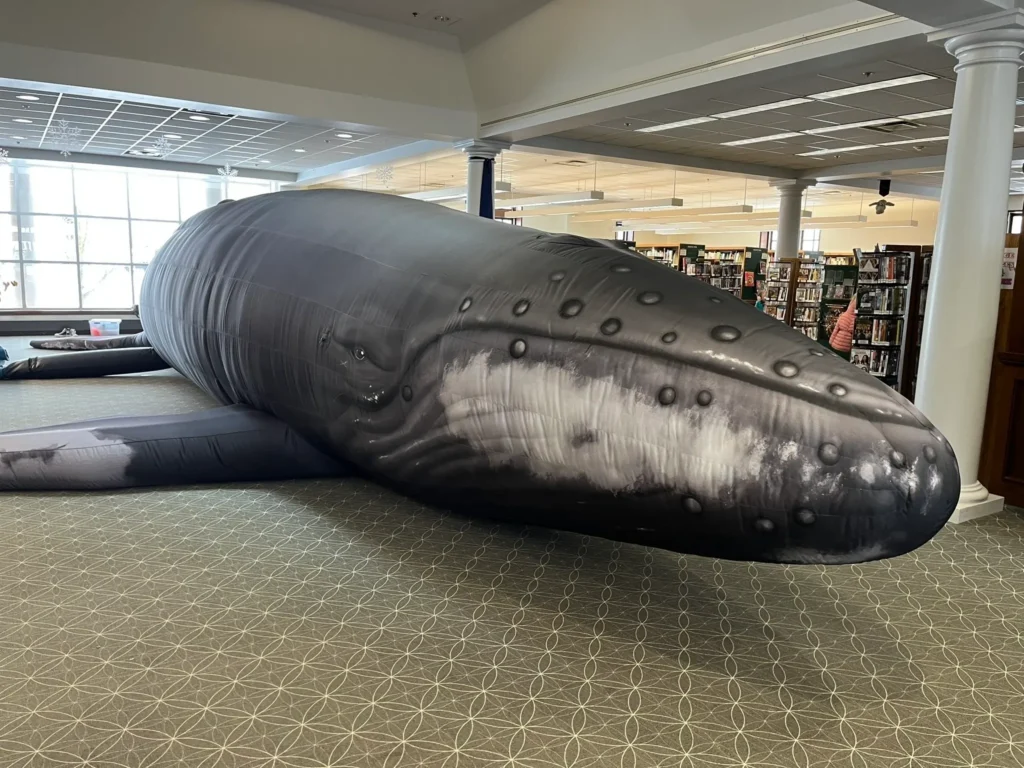
At The Whalemobile, we believe people protect what they understand—so we bring ocean science to life through stories, hands-on learning, and by bringing a life-sized whale in schools and libraries. To learn more about our programs, visit our website at www.thewhalemobile.com.