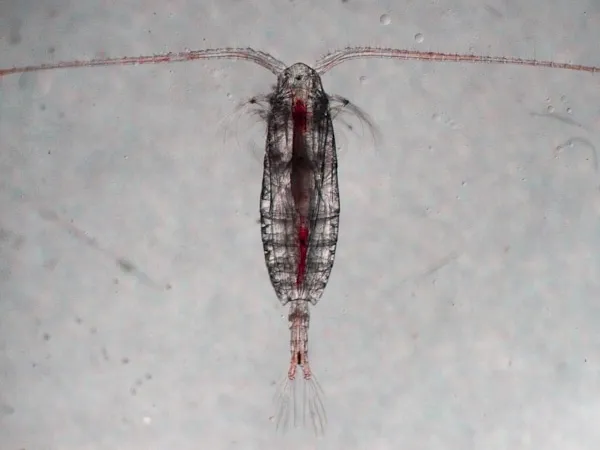
What if we told you that ‘Plankton’ in the show Spongebob Squarepants lives in the Gulf of Maine? In the world of Spongebob Squarepants, the character Plankton is actually based on a real-life marine creature called a copepod! While the animated Plankton is portrayed as a villainous mastermind always trying to steal the Krabby Patty secret formula, his real-life counterparts are tiny, nearly microscopic (about the size of a grain of rice) crustaceans that play a key role in the ocean’s food web.
As some of the most abundant zooplankton in these waters, they serve as a primary food source for a variety of marine species, from krill to small schooling fish to large baleen whales. Copepods feed on phytoplankton, converting the energy from microscopic plants into a form that can be consumed by higher-level predators. Their abundance and high nutritional value make them essential in sustaining the region’s food web. Copepods, like the predominant species Calanus finmarchicus, thrive in the nutrient-rich waters in the Gulf of Maine, where cold water currents and upwellings create ideal conditions for plankton blooms.
Copepods derive their name from the Greek words “kope” meaning “oar,” and “pous” meaning “foot.” This name refers to the unique morphology of these small crustaceans, particularly their specialized appendages, which resemble oars. Copepods have two pairs of antennae that are long and flexible, allowing them to swim efficiently through the water. The movement of these antennae is similar to the stroke of an oar, helping copepods navigate their aquatic environment effectively. Copepods are capable of propelling themselves up to 500 times their body lengths in less than a second!

The life cycle of copepods in the Gulf of Maine involves several stages, beginning with the egg stage and progressing through nauplius and copepodite stages to adulthood. The process typically starts when adult female copepods release their eggs into the water column. Depending on the species and environmental conditions, a single female can produce hundreds to thousands of eggs. These eggs then float in the water until they hatch into the first larval stage known as nauplii.
Copepods go through metamorphosis. The nauplii are free-swimming and undergo a series of molts, gradually transitioning into the copepodite stage. This stage can be divided into several sub-stages (copepodite I and copepodite IV), with each molt bringing the copepod closer to adulthood. As they grow, copepodites continue to feed on phytoplankton and other microscopic organisms. As copepods mature into adults, their behavior often shifts with the onset of diurnal migration. That means the adults migrate to deeper waters during the day to avoid predation while returning to the surface at night to feed. This vertical migration is essential for their survival and plays a critical role in nutrient cycling within the marine ecosystem. By moving between depths, copepods help transport organic matter and nutrients from the surface to deeper layers, contributing to the health and balance of the marine food web.
Not only are copepods essential for the food web and nutrient cycling, but they are considered indicator species for the health of marine ecosystems. Their populations can reflect changes in environmental conditions, such as temperature, salinity, and nutrient availability. Monitoring copepod populations can provide valuable insights into the broader ecological health of the Gulf of Maine.
As we learned in last week’s blog post, some baleen whales are specialists. The critically endangered North Atlantic right whale that migrates up through the Gulf of Maine in early spring are copepod specialists. If the copepod population becomes unstable in the Gulf of Maine, what do you think will happen?
Check out our video about copepods HERE!
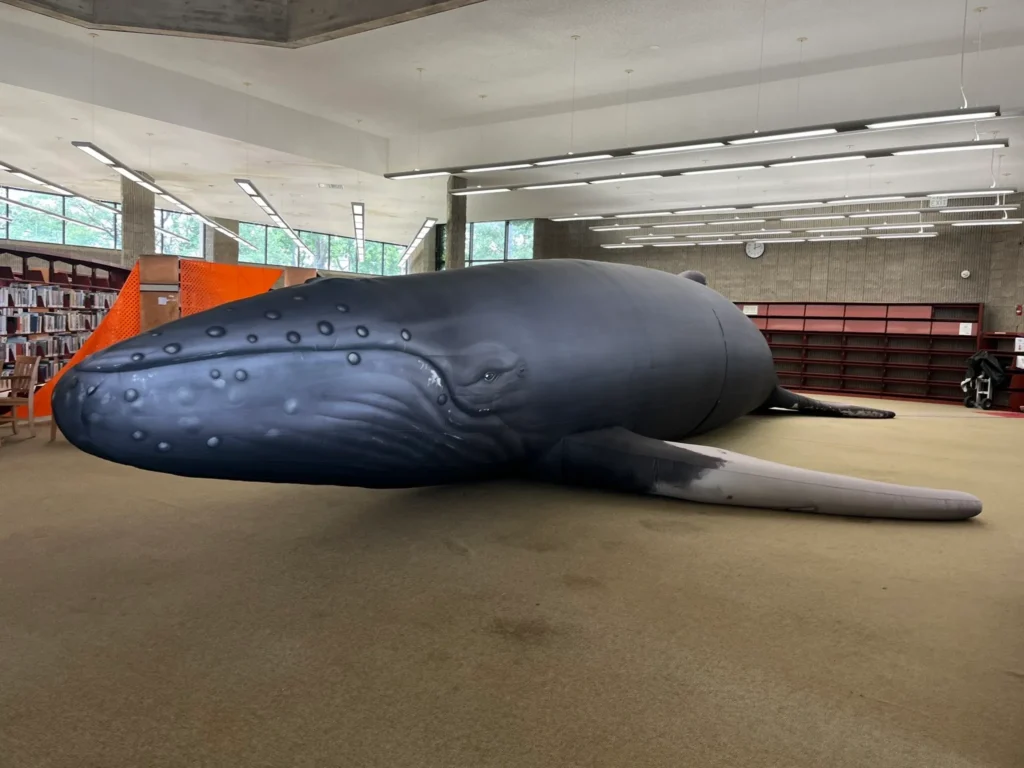
At The Whalemobile, we believe people protect what they understand—so we bring ocean science to life through stories, hands-on learning, and by bringing a life-sized whale in schools and libraries. To learn more about our programs, visit our website at www.thewhalemobile.com.