How Humpback Whales Work Smarter, Not Harder
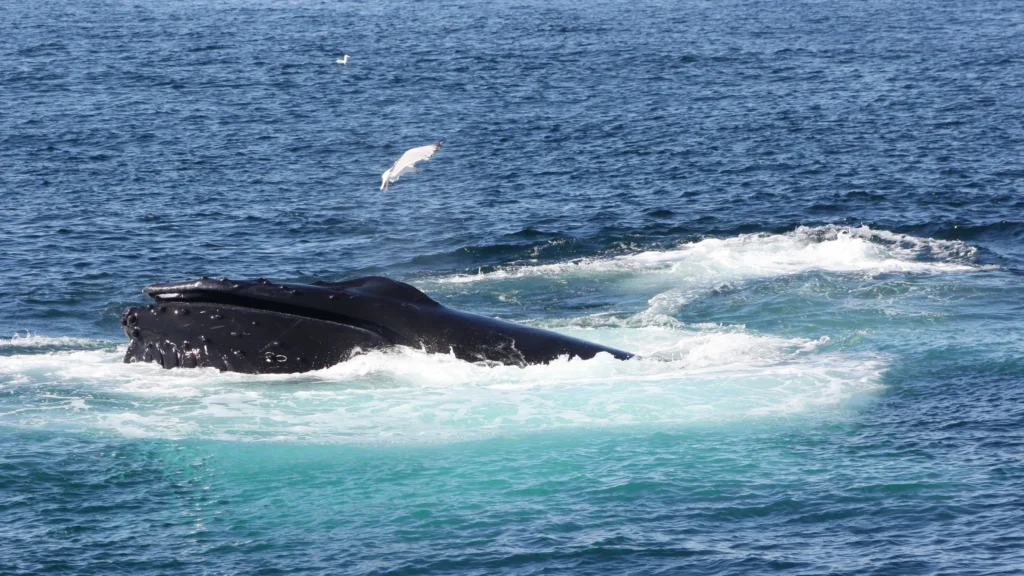
If you’ve ever watched a humpback whale feed, you might have seen something that looks a little like an underwater magic trick—clouds of bubbles rising to the surface just before the whale lunges upward with its mouth wide open. These aren’t just pretty underwater effects—they’re a clever tool called bubble clouds, and they’re one of the ways humpbacks corral their food.
What Is a Bubble Cloud?
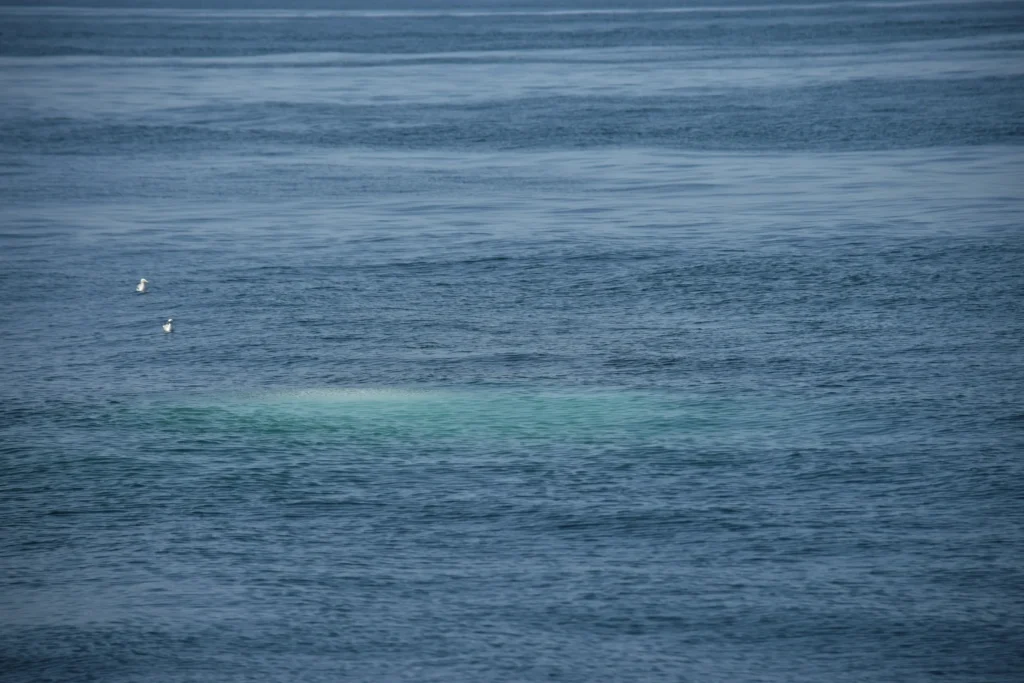
A bubble cloud is exactly what it sounds like—a cloud of bubbles created when a whale exhales underwater. These bubbles help herd small schooling fish like sand lance or herring into a tighter group, making it easier for the whale to swoop in and gulp them down. Think of it as underwater herding: the bubbles confuse the fish and keep them from escaping.
While some humpbacks use large, organized group strategies like bubble-net feeding (a more dramatic team effort involving spirals and timing), simple bubble clouds are often a solo act. And around here—off the coast of Massachusetts—we’ve noticed something interesting: it’s typically the older whales that use bubble clouds.

A Whale Watch with a Lesson in Feeding Strategy
I’ll never forget one day on the water, watching three older female humpbacks each doing their own thing. Spread out across the surface, they were all busy creating their own bubble clouds and feeding with focus and finesse. But what really caught my eye was a young male named Tunguska.
Instead of blowing his own bubble clouds, Tunguska zipped back and forth between the feeding females. As each one lunged through her self-made bubble corral, Tunguska swooped in after, grabbing whatever fish he could snag. It was a textbook example of mooching—and it’s not uncommon among young whales.
Juvenile humpbacks are still learning the ropes. Feeding takes skill, practice, and patience. Some techniques—like making an effective bubble cloud—aren’t second nature for them yet. So they watch, they follow, and yes, sometimes they sneak in for an easy meal.
Whale Culture in Action
Here’s where it gets really fascinating. Not all humpbacks use bubble clouds, and in fact, we’ve noticed fewer simple bubble clouds over the years as other feeding methods—like dragging and kick-feeding—become more common in our local population.
This shift has become part of the growing evidence that humpbacks have culture. Just like humans, whales seem to pass on learned behaviors from one generation to the next. Feeding strategies aren’t hardwired—they’re shared, practiced, and refined. And over time, certain techniques rise or fall in popularity, much like trends in our own communities.
So next time you see a whale blow a mysterious ring of bubbles beneath the waves, remember: you’re not just watching a feeding whale—you’re witnessing a glimpse of whale culture in action.
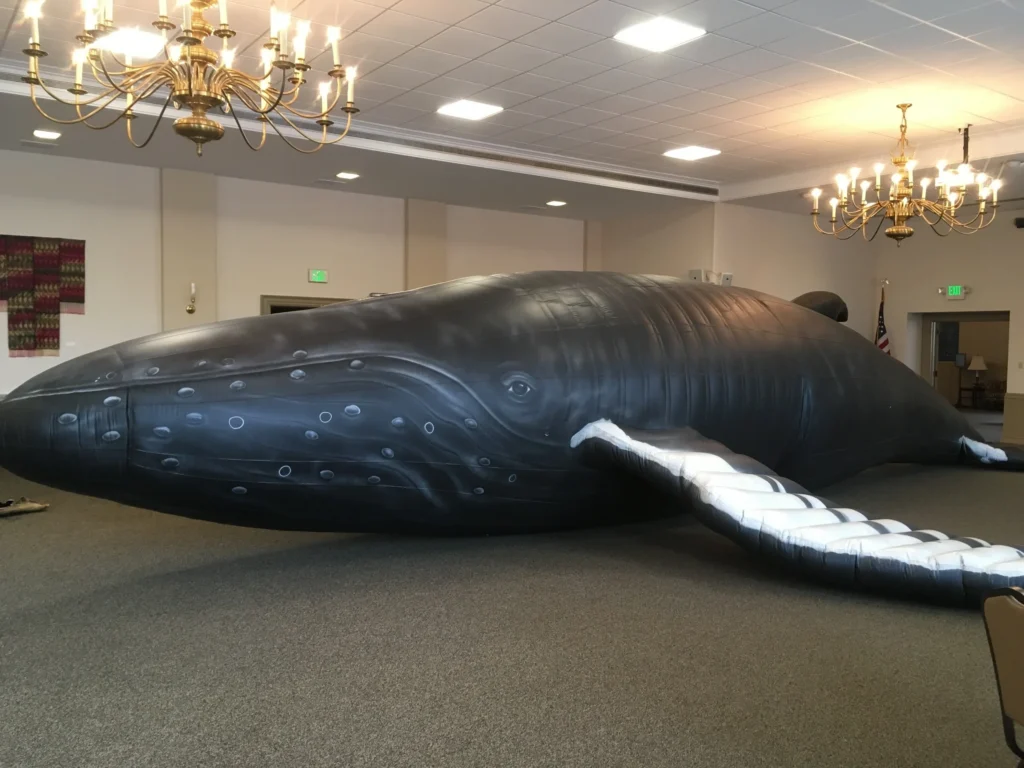
At The Whalemobile, we believe people protect what they understand—so we bring ocean science to life through stories, hands-on learning, and by bringing a life-sized whale in schools and libraries. To learn more about our programs, visit our website at www.thewhalemobile.com.