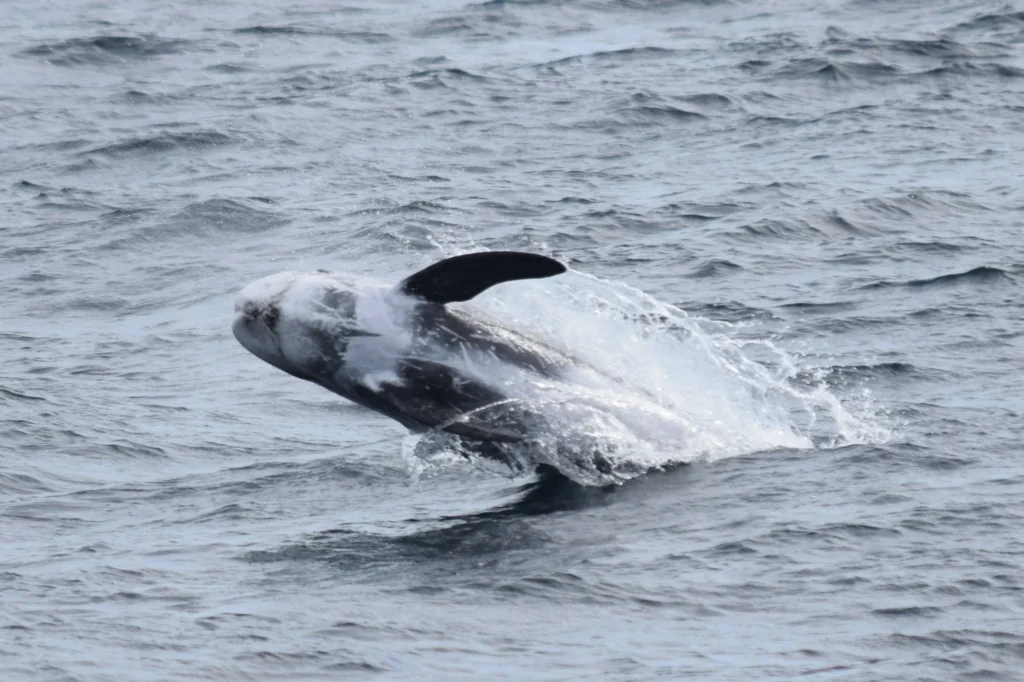
Have you ever wondered how animals get their names? I know someone who is reading this has wondered this because students ask The Whalemobile team this question often! Sometimes, they’re named after the person who first studied or discovered them – like a special kind of shout-out! That’s exactly what happened with Risso’s dolphins (Grampus griseus). These scar-covered dolphins are named after a scientist named Antoine Risso, who first described them back in the 1820s. Imagine being so fascinated by an animal that it ends up with your name forever! Risso’s dolphins are as unique as their name, with bodies covered in white scratches that make them look like swimming works of art. Pretty neat, right? Let’s dive deep into the mysterious and fascinating world of the risso’s dolphin:
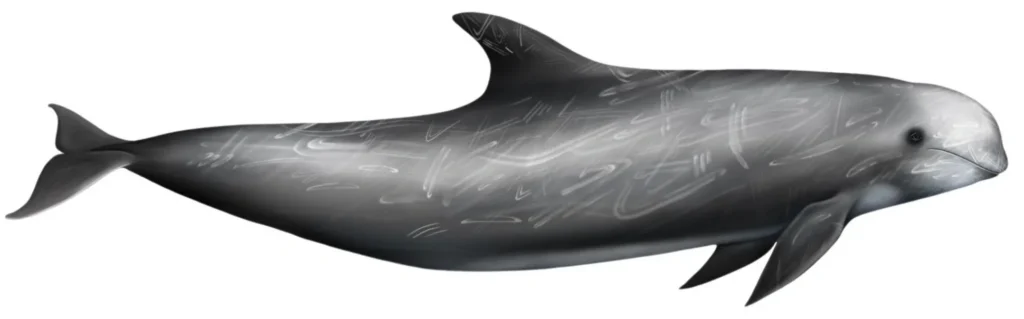
Based on what we’ve learned so far in this ecosystem series about different dolphin species, do Risso’s dolphins look like what you’d imagine when someone says the word “dolphin”? You’re probably thinking…not exactly! That is because while Risso’s dolphins are definitely part of the dolphin family, they don’t have the classic “dolphin look” most people imagine. Last week, we learned that all toothed whales, like dolphins and sperm whales, have a special organ in their forehead called a melon. The melon is like a big, squishy balloon made of fat, and it helps these whales “see” underwater by using sound waves to find food and communicate with each other. Do you remember what the word is for that?
But here’s where the Risso’s dolphin is different: While most toothed whales have a smooth melon, the Risso’s dolphin has a cleft melon—which means it has a small split or indentation in the middle of its melon, kind of like a little dent. This unique cleft helps focus the sound waves even better, making the Risso’s dolphin super skilled at using echolocation to hunt squid and explore the deep ocean! So, while all toothed whales have a melon, the cleft melon on a Risso’s dolphin is what makes it extra special!

Risso’s dolphins are some of the biggest in the ocean! They can grow to 13 feet long, which is about the size of a small car and can weigh as much as 1,100 pounds–thats like the weight of a big bear! The females are a bit smaller than males, but are still huge and strong. Their tall, curved dorsal fins are one of the tallest (up to 45 cm) in proportion to their bodies in the cetacean world. This fin helps them stay steady as they swim at high speeds.
Now, let’s talk about their teeth. Risso’s dolphins have teeth, but they are a little different than most dolphins. They only have teeth on their bottom jaw (4-15), and on their upper jaw they have vestigial teeth, which means they’re tiny, leftover teeth that really don’t work anymore. Feeding occurs mostly at night time, in the deep ocean. Risso’s hunt using cooperative feeding. This means that they work together as a team and catch their meals. They even use suction to suck in their prey (mainly squid and octopus), kind of like when you use your straw to drink your juice. This special feeding technique makes sense, especially due to their small number of teeth!
You might also notice that Risso’s dolphins don’t look like they’ve always been so scarred. When they’re born, they actually have smooth, gray skin. Over time, they start getting scars on their bodies. These scars come from all kinds of things, like fighting with other dolphins, rubbing against squid, or even scraping against the ocean floor while hunting. These scars are a big part of what makes each Risso’s dolphin look unique—kind of like their own personal story written on their skin! And that’s why their coloration is so highly variable—each one is different depending on how many scars they’ve collected through their adventures in the sea.
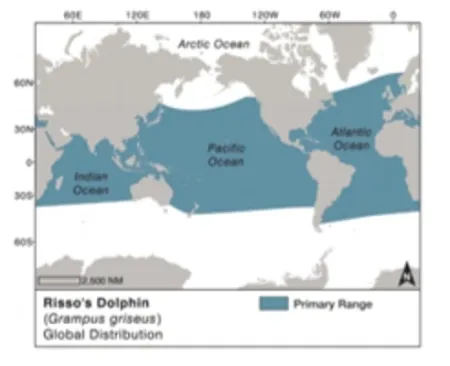
Risso’s Dolphins can be found in tropical and temperate waters all over the world. They prefer deep, open ocean waters, where they can hunt for their favorite food–squid. Although common in areas such as the coast of California and Japan, they are considered rare visitors here in the Gulf of Maine. Although among one of the rarest species to be seen in the Gulf of Maine, The Whalemobile team has been lucky enough to have some encounters with these special species! Stay tuned for our video on Friday to learn more about these sightings!
Check out the importance of citizen science and how this helped contribute to the study of Risso dolphins off of Scotland.
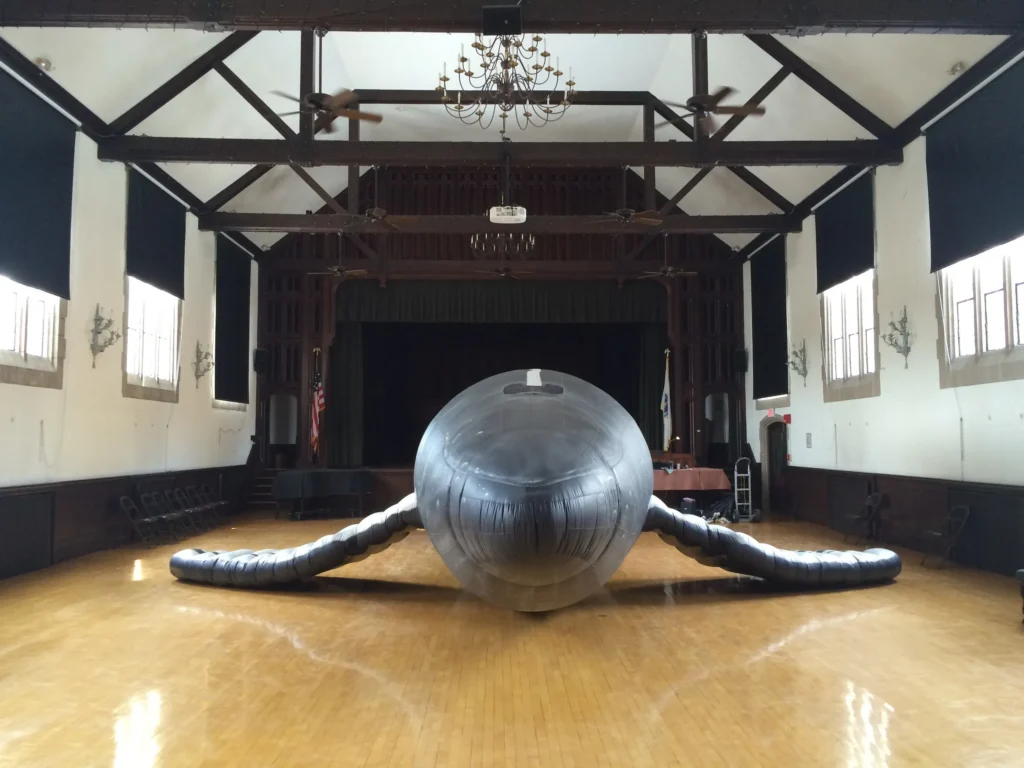
At The Whalemobile, we believe people protect what they understand—so we bring ocean science to life through stories, hands-on learning, and by bringing a life-sized whale in schools and libraries. To learn more about our programs, visit our website at www.thewhalemobile.com.