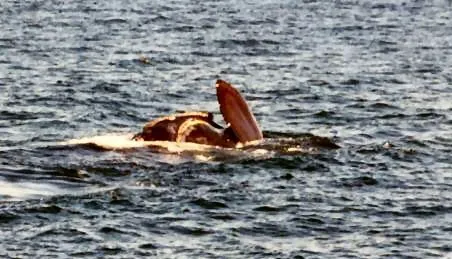
This is what it currently feels like in the world of right whales…
…Numbers are as low at 360 individuals
…There are 14 new calves born in 2021
…A right whale calf was struck by a boat and died this past weekend
…Calf number 15 was spotted this past weekend.
The news about right whales is constantly going back and forth between hopeful and dismal.
When I started whale watching, numbers were less than 300 individuals. In 1994, our guidelines were to stay 300 ft away from right whales (and 100 ft from other species). Whenever a right whale was sighted, all the whale watch boats would take turns watching and enjoying the sighting of this rare species.
One of the most memorable sightings was watching 3 individuals rolling around. We couldn’t really tell which flipper belonged to which whale. They ended up surfacing in a way that made us wonder if they weren’t mating. We encountered them quite a few times in the first few years I was whale watching (mid 90’s).
In 1997, there was a rule (now a law) to stay back to 500 yds. If we did encounter a right whale, we would watch from a distance–still impressing upon people how exciting it was to see them. Their population was increasing slowly. By 2010, there were close to 500 whales–the population had almost doubled.
During that time in the early 2000’s, I was fortunate to work with the Whale Center of New England and do some of the right whale surveys on Jeffreys Ledge. We would start at sunrise and run track lines up the West, East and middle of Jeffreys. I remember one morning so clearly. We ended up seeing 13 right whales on this particular day. It was early, and we found a group of about 8 skim feeding whales. The sun was low on the horizon and the copepods were so dense in the glare, that you could see them dancing at the surface of the water. It was incredible! And of course the early morning lighting only added to the experience!
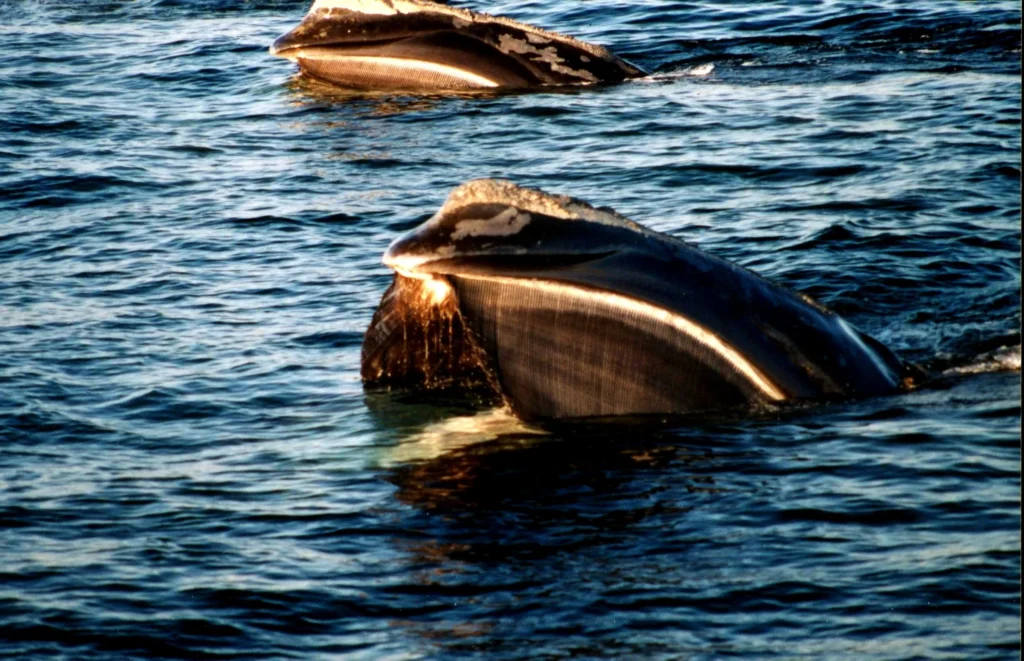
Since 2010, the right whale population has had a steep decline. A recent report stated that 90% of the known causes of death in right whales has been because of entanglement in fishing gear or vessel strikes. Humans are the reason they are dying. We must try harder. These are such amazing animals. Right now, we can take action to directly help the whales. We can comment on a proposed rule from NOAA that attempts to reduce entanglement in fishing gear. This rule will not do enough. These whales need us to take 5 minutes and write a comment. Click here to see the Year of the Right Whale’s blog post about where to comment and what to say.

I hope that these animals can hang in there and begin to rebuild their numbers. They can if given a healthy ocean and space away from human impacts. They have done it before!
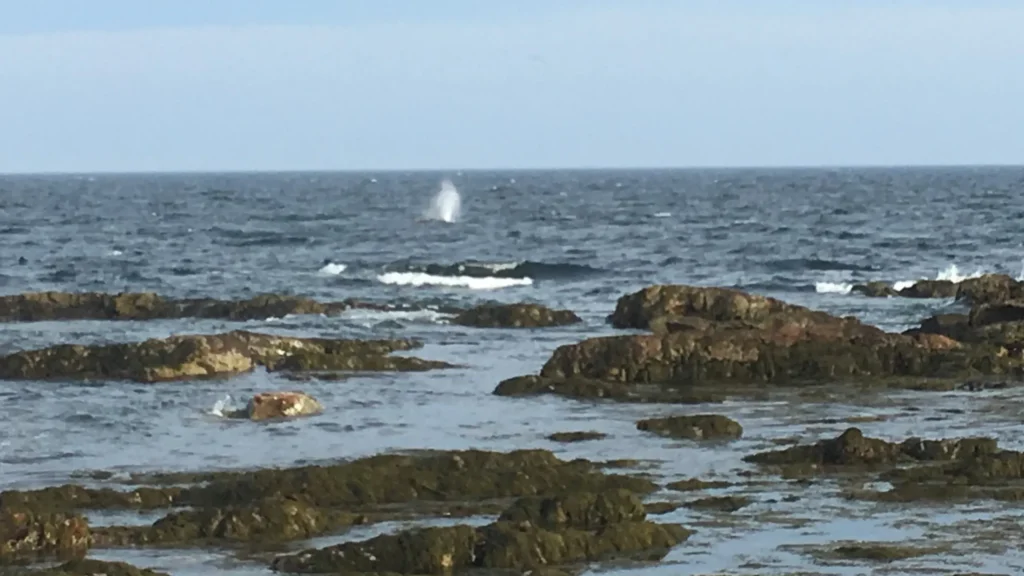
I’ll leave you with a sighting from 2018. There was a right whale skim feeding off the back shore of Gloucester (the only time I’ve even seen one from land.) I had done a Whalemobile presentation at my son’s school that day and I went to pick him up and said, “Come on, we are heading to Gloucester to go see a whale.” The kids he was with were like, “You have been talking about whales all day and now you are going to see one!” I said, “Of course, it’s a right whale, and I’ve never seen one from shore in almost 25 years!” These pictures were just taken with my phone–so not clear. You can see the blow in one picture and the head on the left side of the other picture (the black blob). I hung out there just watching this whale go back and forth feeding all afternoon. It’s so awesome to be in the presence of one of these whales! Especially because there are so few left! Please if you have a minute, go comment for right whales!!!!
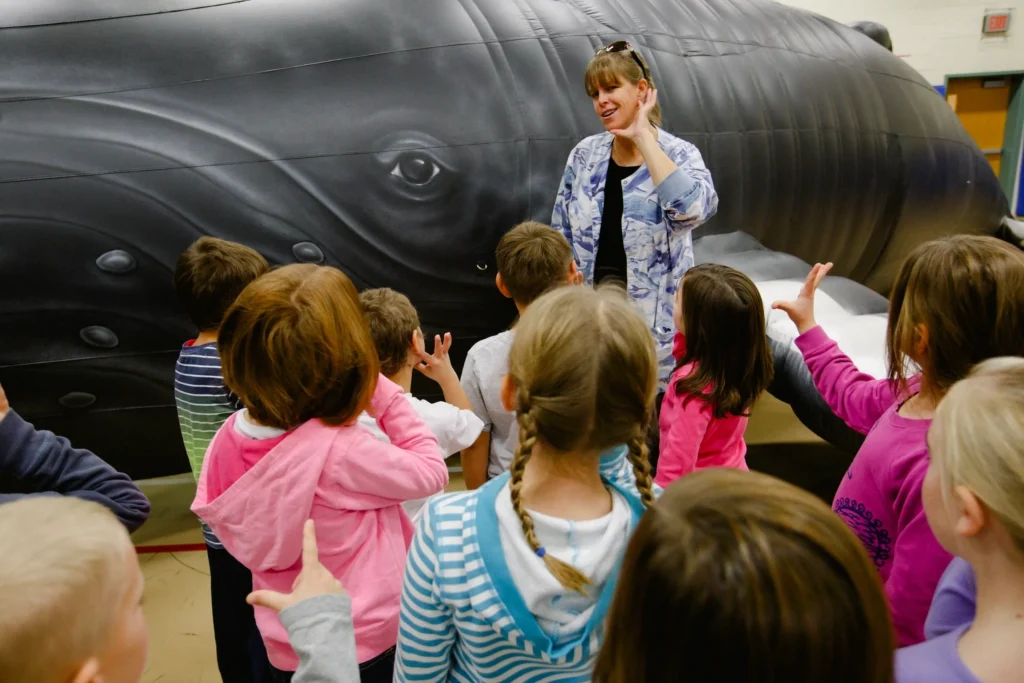
At The Whalemobile, we believe people protect what they understand—so we bring ocean science to life through stories, hands-on learning, and by bringing a life-sized whale in schools and libraries. To learn more about our programs, visit our website at www.thewhalemobile.com.