Here's a Deeper Dive Into Program Content
Whether you're planning a visit for one grade or your entire elementary school, we have a specific plan for what we cover at each grade level.
Our programs are designed to connect with the science students are already learning—but we also love to follow their curiosity! If your students are especially interested in a topic, our educators are happy to explore it further. And if there’s something you’d like us to cover, let us know. We may already have an activity for it, from evolution to whale conservation and threats.
Explore the grade levels below to see the key concepts we cover.
Inside the Whale: We Tailor This Content to Each Grade
Meeting students where they are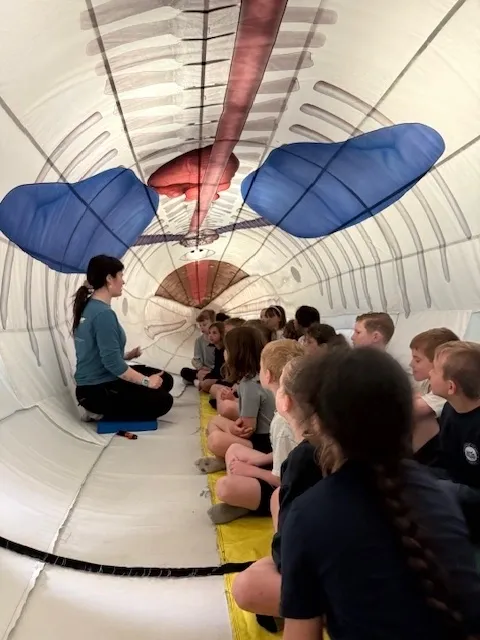 20-Minute Session
It's All About Anatomy
Every student begins inside Nile, our life-sized inflatable humpback whale. Surrounded by a realistic model of a whale’s internal anatomy, students can see the heart, lungs, ribs, stomach, and intestines as they discover how these structures help a whale survive in the ocean. During this 20-minute experience, our educators bring whale biology to life through stories, questions, and firsthand experiences from the field. Students explore how whales breathe and eat, how scientists study them, and the challenges whales face in the wild—and, of course, whale poop and how it helps the ocean and our planet.
- Whale internal anatomy
- How whales breathe & eat
- Ocean adaptations
- How scientists study whales
- Challenges whales face
- Whale poop & ocean health
Fish and Squid Dissections
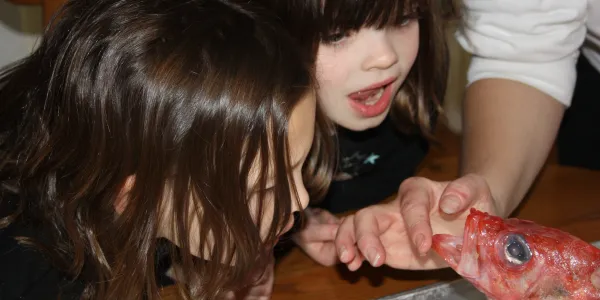 In Person
Ready for Something Different?
Take anatomy learning a step further with a hands-on dissection. Fish and squid dissections give students the opportunity to examine real structures, compare how different animals are built, and explore how form and function help animals survive.
Ask About Dissections & PricingWe have programming for everyone!
From kindergarten circle time to high school assemblies, every program is built to meet students exactly where they are.
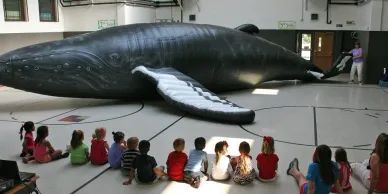 K–5
Elementary schools
Bring science to life. Students step inside a life-sized humpback whale and explore science through hands-on, grade-specific activities. From anatomy and adaptations to survival and ecosystems, we connect classroom concepts to the real world through whales and the ocean.
- Explore marine life
- Connect classroom science
- Spark curiosity
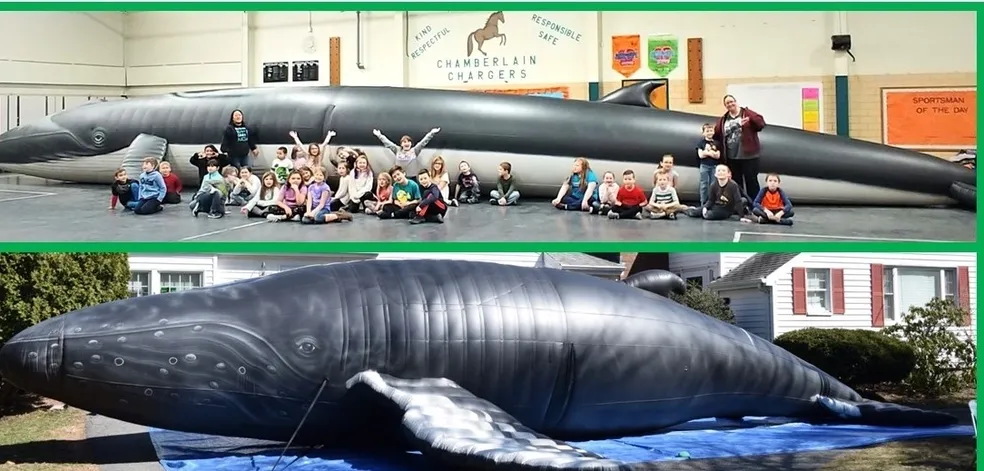 Grades 6–8
Middle schools
Take whale science deeper. Middle school students are never too old to step inside a whale! The experience becomes a springboard for deeper conversations about anatomy, adaptations, behavior, conservation, and how scientists study whales in the wild. Programs can be tailored to connect with what students are learning in class.
Middle school programs →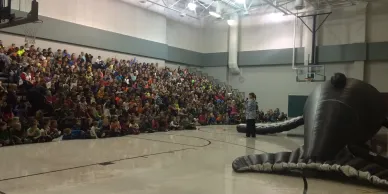 Grades 9–12
High schools
Real-world science. Real-world issues. For high school students, we use whales as a lens for exploring biology, ecology, conservation, and current challenges facing marine ecosystems. Programs can be designed as interactive assemblies or tailored around specific topics—and yes, students still get a chance to experience the whale!
High school options →