In the winter months, when biting cold creeps into New England waters and our seas sit largely empty of humpback whales, avid whale watchers of the north wait with bated breath for news from the south.
There, among the sheltered bays and reefs of the Caribbean, humpbacks from across much of the Atlantic Ocean converge to mate, give birth, and begin raising calves. From the feeding grounds in the Gulf of Maine, this journey covers over a thousand miles and can take weeks to complete. All throughout, they are not eating, living entirely off the fat reserves they built up during their time on the summer feeding grounds.
As humpbacks filter into the winter breeding grounds, the metaphorical baton is passed from the researchers of New England and Canada to the researchers of The Bahamas, Turks & Caicos, The Dominican Republic, and more. There, they use the very same photo-identification methods as we do, using the unique underside patterns of the whales’ massive flukes to identify individuals. This information is passed along to the opposite set of researchers, and together the scientists of both areas can piece together a specific whale’s traveling history, even as that whale passes in and out of the sight of each party.
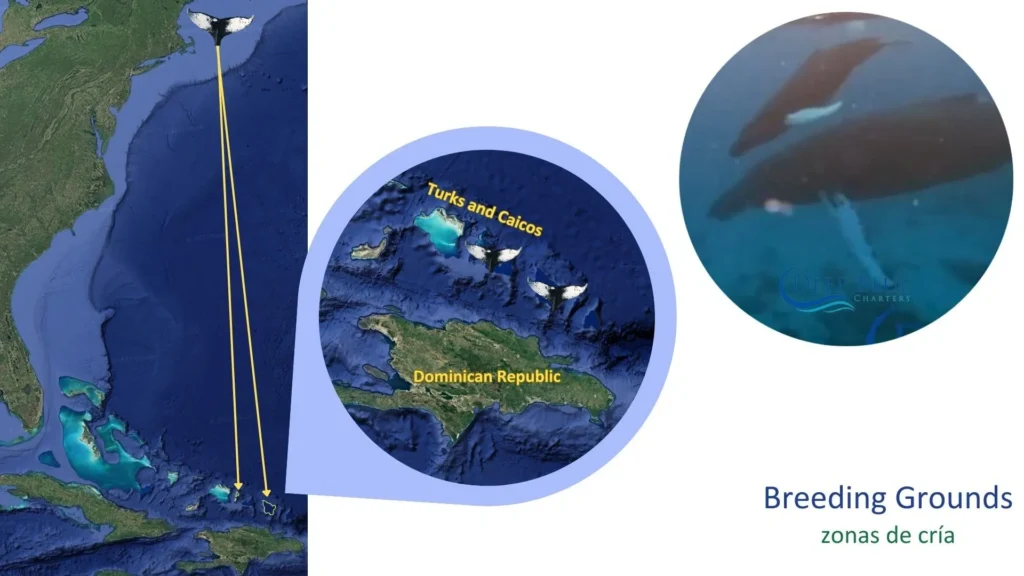
As anticipated, familiar faces and flukes have already shown up. Among them are well known and well loved individuals, such as Etch-a-Sketch, a granddaughter of the famous humpback Salt; Pinball, a beloved regular of Jeffrey’s Ledge; and beautiful Xylem. Another Gulf of Maine regular, Giraffe, was recently spotted with the first known calf of the season!
Readers familiar with the Whalemobile may be wondering: what about Nile? While her presence there has never been reported as of yet, and while we unfortunately cannot divine her precise location with whale-finding magic, we can say with confidence that she is very likely down there too! Reports are still gradually rolling in, and you’ll be sure to know if Nile is among them in a future newsletter.
Critically endangered North Atlantic right whales are also on the move during this time. Just like humpbacks, they seek warmer southerly seas for much the same purposes, though with different range—they stay a little closer to home, typically ending up in a swath of coastal seas straddling the southeastern states of South Carolina, Georgia, and Florida. In this area, precious additions to the species’ dwindling population are born. The birth and survival of each and every calf counts, and so far researchers have counted nine new right whale calves this year!

The mothers of these calves vary in age, in experience, and in history. Some, like 20-year-old Caterpillar (catalog number #3503), are first-time mothers. Others, like 40+ year-old Grand Teton (#1145), have had numerous calves (nine, in this case!) and are no stranger to motherhood. One of these new mothers, Accordion (#4150), is a storied survivor, bearing the telltale scars of a ship strike on her back.
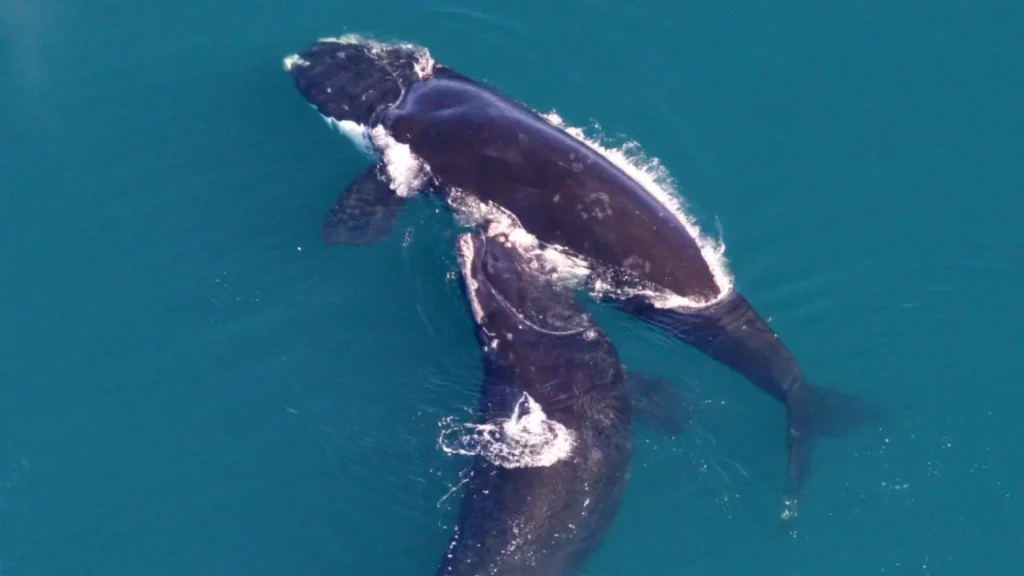
Not all North Atlantic right whales end up where we expect them to be, though. Some find their way to strange places—why? We can only guess! In what news headlines dubbed a “rogue ‘girls trip,’” females Koala and Curlew (#3940 and #4190 respectively) were recently spotted cruising as a lone pair in the Gulf of Mexico, reportedly ranging as far as the coast of Alabama. This, of course, is a highly unusual spot for right whales to show up, and the duo’s misguided journey caught significant media attention for a time.
They aren’t the only case, either. In July of 2024, one particularly adventurous North Atlantic right whale was even spotted off the coast of Ireland! The forces that bring wayward whales to such odd places aren’t known to us, but, when working with whales, there is always more to discover.
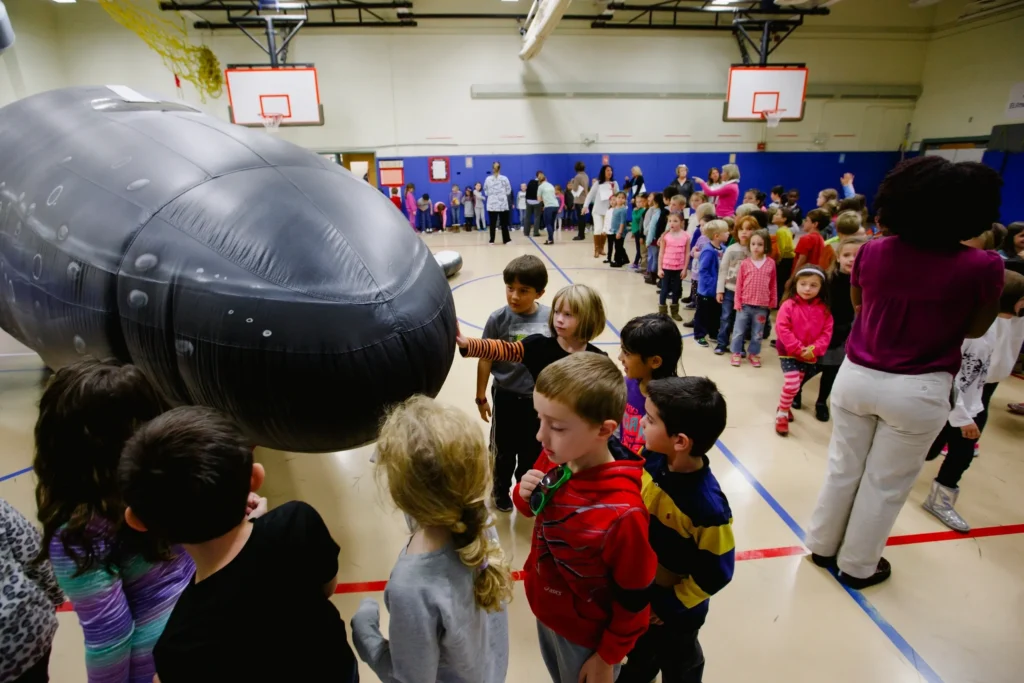
At The Whalemobile, we believe people protect what they understand—so we bring ocean science to life through stories, hands-on learning, and by bringing a life-sized whale in schools and libraries. To learn more about our programs, visit our website at www.thewhalemobile.com.