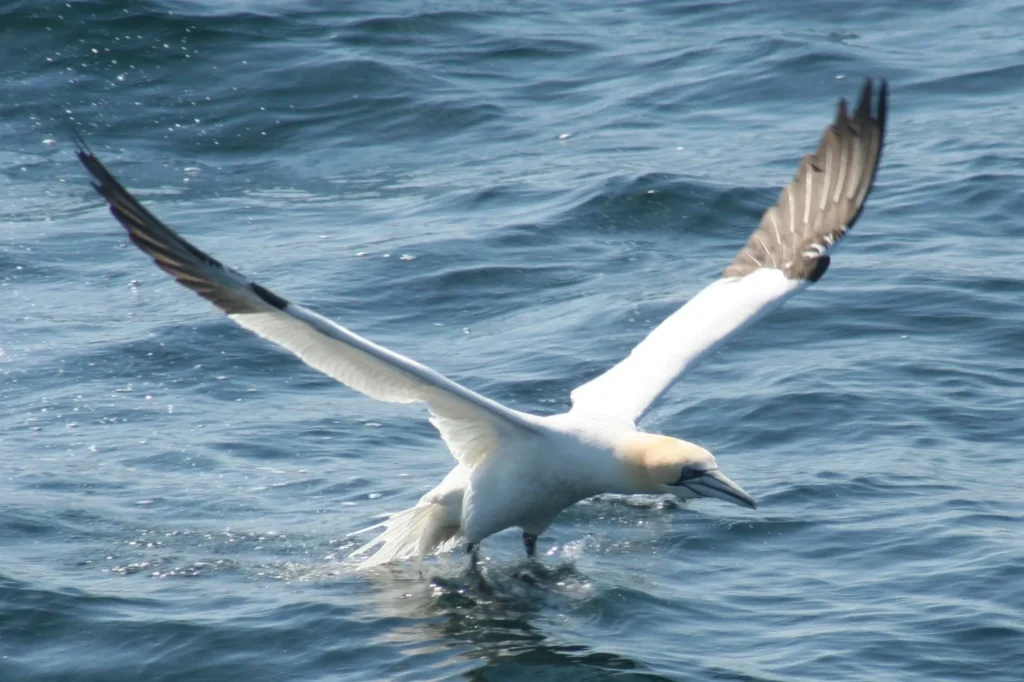
Welcome back, ocean warriors! Can you believe it…we have made it to the final species in our ecosystem series! After 23 species, we’ve built an incredible ocean food web, showing just how connected life is beneath the waves. Which species has been your favorite to learn about? Don’t choose just yet! We have one more to discuss. Let’s take to the skies for our last creature–the Northern Gannet (Morus bassanus). These incredible seabirds are the high diving champions of the Gulf of Maine, plunging into the ocean at speeds of over 60 miles per hour to catch fish. With their golden heads, sleek white feathers, and striking blue eyes, they are as beautiful as they are powerful. Get ready to meet the ultimate feathered fisher of the North Atlantic!
Northern gannets belong to the booby family, Sulidae, a group of seabirds known for their incredible diving skills, streamlined bodies, and strong, pointed beaks perfect for catching fish . Unlike gulls or other seabirds that might scavenge, members of the Sulidae family are expert hunters, plunging into the ocean from great heights to snatch their meals with precision. One of the most amazing things about northern gannets is their ability to dive from heights of up to 100 feet, hitting the water at speeds of 60 mph–without breaking their necks! Their bodies are perfectly designed for these high-speed plunges. They have special air sacs in their face and chest that act like built-in cushions, absorbing the impact when they hit the water. Their skulls are also reinforced helping to protect their brains from the dive. But, what about water going up their nostrils? Unlike many birds, gannets don’t have external nostrils. Instead, their nostrils are sealed shut, preventing water from flooding in as they dive.
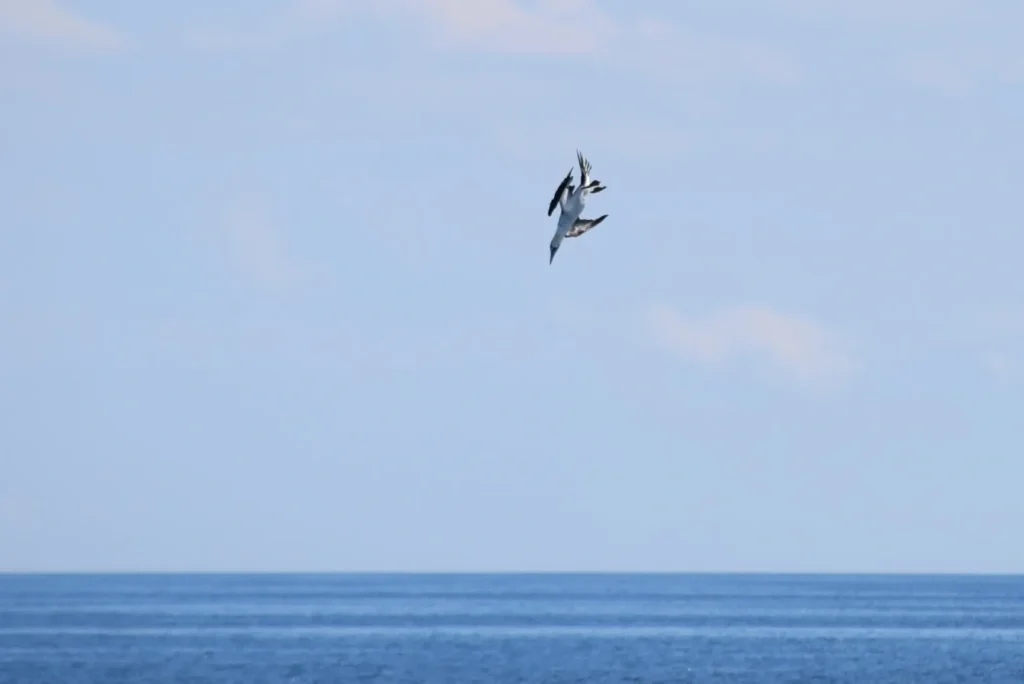
Northern gannets are also known for their remarkable eyesight, which is essential for spotting fish from high in the sky. Their striking blue eyes give them a sharp, clear vision, allowing them to see their prey from hundreds of feet above the water. Their keen vision is a huge advantage when hunting, helping them pinpoint schools of fish with precision before diving in for the catch. These incredible adaptations make northern gannets one of the most efficient and fascinating seabirds in the North Atlantic!
Northern gannets are among the largest seabirds in the North Atlantic, with impressive wingspans of six feet! These seabirds are monogamous, and mate for life–forming strong, lasting bonds with their partners. During the breeding season, they return to the same nesting sites each year, where they work together to raise their young. Their nests are built on rocky cliffs or islands, where they lay a single egg, and both parents take turns keeping it warm and feeding the chick once it hatches. Northern gannets travel long distances between their breeding and wintering grounds. In the summer, they breed in large colonies on rocky islands off the coasts of Canada and northern Europe, such as Newfoundland. After the breeding season, these majestic birds head south, often as far as the Gulf of Mexico, to spend the winter in warmer waters where fish are abundant. Then, as the weather warms up, they return north in the spring, ready to nest and raise their young once again.

In the Gulf of Maine, northern gannets are considered “shoulder season” birds, meaning they’re most commonly seen during the spring and fall. These seasons mark the birds’ migratory periods, and that’s when we get to enjoy seeing them as they pass through the area. In the fall, you’ll find gannets feeding on the plentiful fish in the Gulf of Maine, and during the spring, they’re returning north. During these times, gannets often participate in exciting feeding frenzies with other marine life, including whales! When a group of whales or dolphins finds a school of fish, northern gannets will come “out of the blue” it seems, and swoop in, diving in perfect sync to catch their share. It’s an incredible sight to witness, as the sky and ocean seem to come alive with action.
And guess what? Our whale-watching season is starting in just a few weeks! With it, we’ll be seeing more northern gannets around the Gulf of Maine as they make their seasonal appearance, adding another layer of excitement to our ocean adventures. Keep your eyes peeled for these magnificent birds as they dive and soar above the waves!
If you are interested in learning more about any of these bird species, check out the Seabird Tracking Database supported by BirdLife International!
That’s a wrap on our ecosystem series! We’ve learned about some incredible species that make up the ocean food web. Stay tuned to hear all about our 2025 whale watching season—exciting adventures are just around the corner!
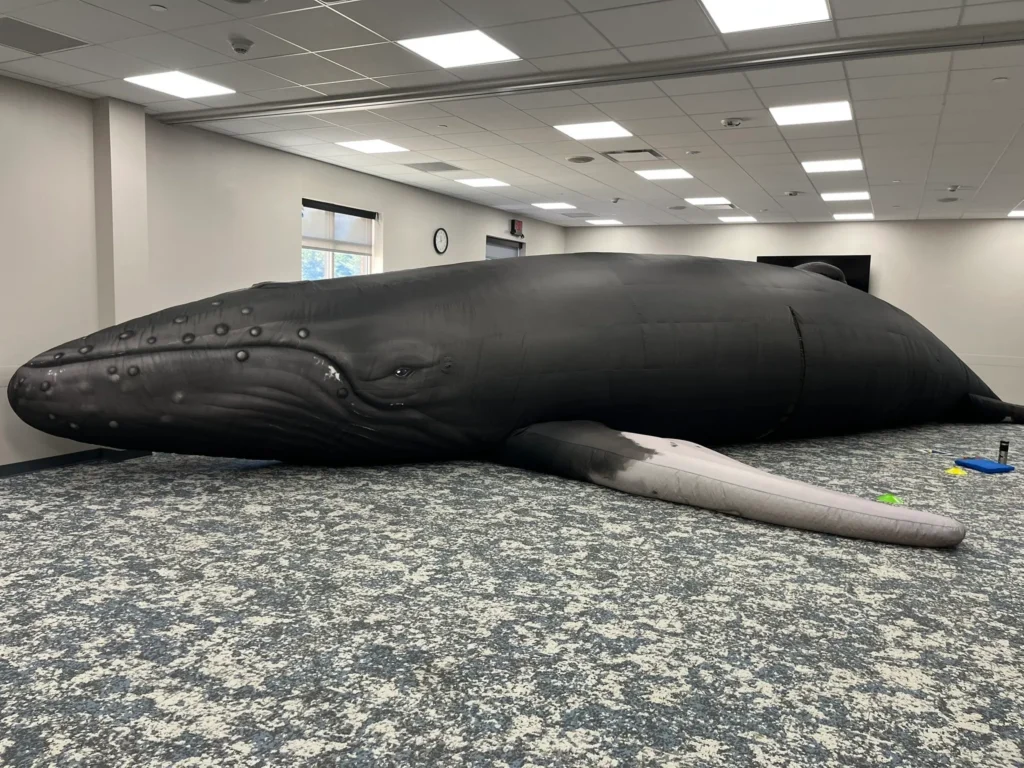
At The Whalemobile, we believe people protect what they understand—so we bring ocean science to life through stories, hands-on learning, and by bringing a life-sized whale in schools and libraries. To learn more about our programs, visit our website at www.thewhalemobile.com.