#TBT Videos
While making #TBT videos of my years of whale watching, I’ve realized how many whales I haven’t seen lately that I used to see quite often in the late 90’s. I wonder where they are! Are they still alive? Have they gone to a different feeding ground? Are other people seeing them, and we don’t hear about it? These animals can live to be up to 80 years old, so they technically should still be alive.
In the Atlantic, the record for longest time between a sighting is 35 years. In 1980, a photograph was taken of a whale in Bonavista Bay, off the east coast of Newfoundland. In 2015, Maurina De Wulf went whale watching in Samana in the Dominican Republic. She is an avid whale watcher, and so sent her pictures to Allied Whale at the College of the Atlantic to be identified. (COA maintains the North Atlantic Humpback Whale Catalog.) They matched Maurina’s whale to the whale that was seen in 1980! Click here for the full story. It makes me wonder if no one saw this whale, or was it seen and just not photographed?
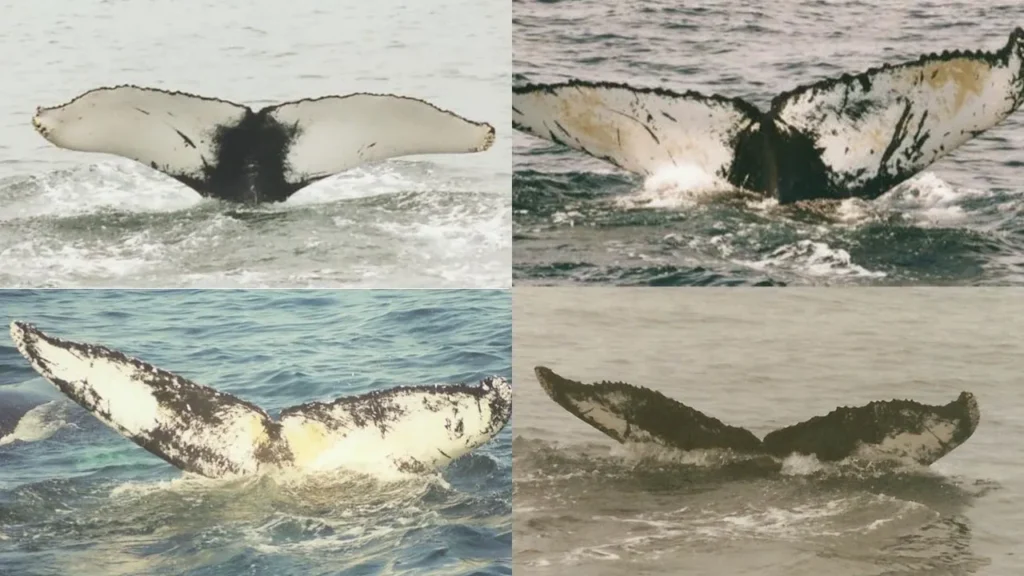
Some of the whales I’ve been thinking of recently are: Sparta, Cascade, Tribble and Compass (top left and clockwise below), to name just a few.
These pictures are all from the late 90’s, and we saw these whales often then. Interestingly, everyone I was thinking of, except Compass, is from the same family. Sparta and Cascade are sisters–both born to Olympia. Tribble is their nephew–a calf of Anchor. Compass is from another family, but we don’t know who her mother is. I haven’t seen them in years. Sparta was a common sight on Stellwagen Bank between 1996 and 2001. Born in 1996, she had her first calf in 2001. She was only 5 years old–the average age of first birth is between 8-10 years. I do remember that both she and her calf looked very small then. Perhaps she didn’t survive that first year–her calf wasn’t spotted often if at all in later years. Tribble was seen entangled in 2000, perhaps he died of the entanglement. I haven’t heard anything about the other ones, good or bad, they simply haven’t been sighted. I wonder what has happened.

Will We Ever Know Where all the Humpbacks Go?
That might be one of the tougher things about studying these animals is not having answers. They live long lives, travel thousands of miles a year, encounter countless obstacles along the way. There are places that humpback go that are not studied I’m sure. Judith Scott, a dear friend and one of my interns from 1999, has been guiding whale watches in a fjord in Iceland for the past few years. She is the first one to be studying whales in that particular fjord. She has identified over 140 different humpbacks and is currently waiting to find out if any of them have been seen other places. (She’s an amazing photographer also!) We still have so much to learn.
As climate change impacts the temperature in the ocean, particularly the Gulf of Maine, we are going to potentially see shifts in prey distribution impacting where these animals go to find food. Will they be in areas that are more out of reach for scientists and therefore less likely to be sighted? Are entanglements in fishing gear or shipstrikes a much bigger issue that we think they are? Are animals dying and sinking never to be seen again? While we wait for answers, I will fondly remember these amazing individuals and some very cool experiences I had with each of them.
We are approaching the beginning of whale watching season here in MA. I wish these animals a safe migration as they make their way north to Stellwagen Bank. While I don’t expect to see the whales I’ve mentioned today, I am hoping to see my favorites very soon!
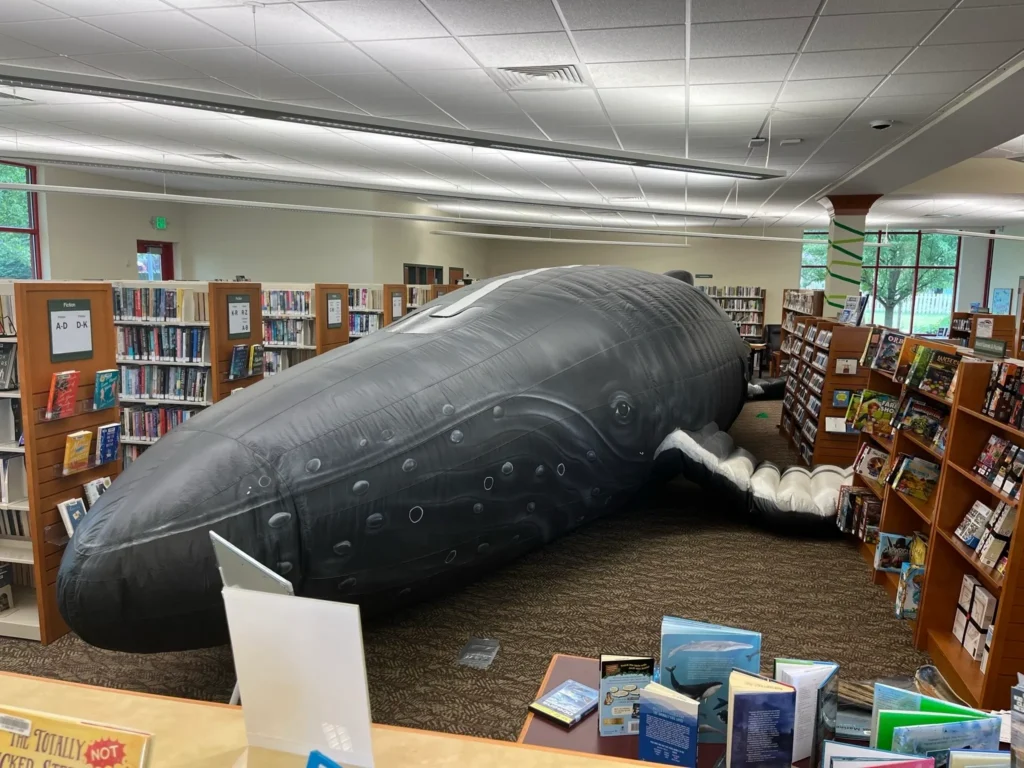
At The Whalemobile, we believe people protect what they understand—so we bring ocean science to life through stories, hands-on learning, and by bringing a life-sized whale in schools and libraries. To learn more about our programs, visit our website at www.thewhalemobile.com.