The Whalemobile

Site Header

Elementary School Program

Deeper Dive Into Program Content

Here's a Deeper Dive Into Program Content

Whether you're planning a visit for one grade or your entire elementary school, we have a specific plan for what we cover at each grade level.

Our programs are designed to connect with the science students are already learning—but we also love to follow their curiosity! If your students are especially interested in a topic, our educators are happy to explore it further. And if there’s something you’d like us to cover, let us know. We may already have an activity for it, from evolution to whale conservation and threats.

Explore the grade levels below to see the key concepts we cover.

Inside the Whale: We Tailor This Content to Each Grade
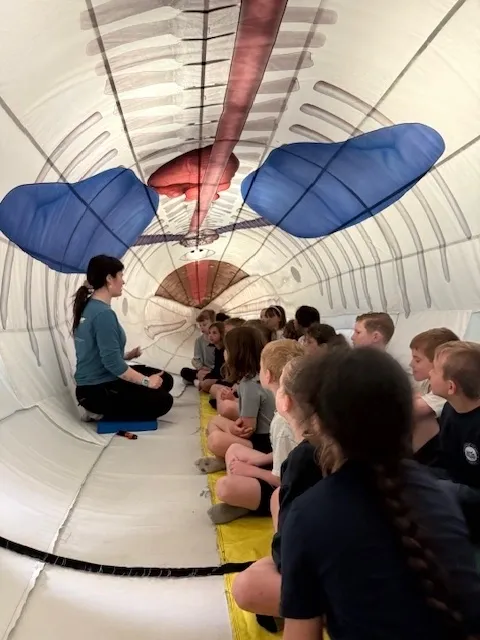
Students seated inside Nile the inflatable whale learning about anatomy 20-Minute Session
Life-Sized Immersive

It's All About Anatomy

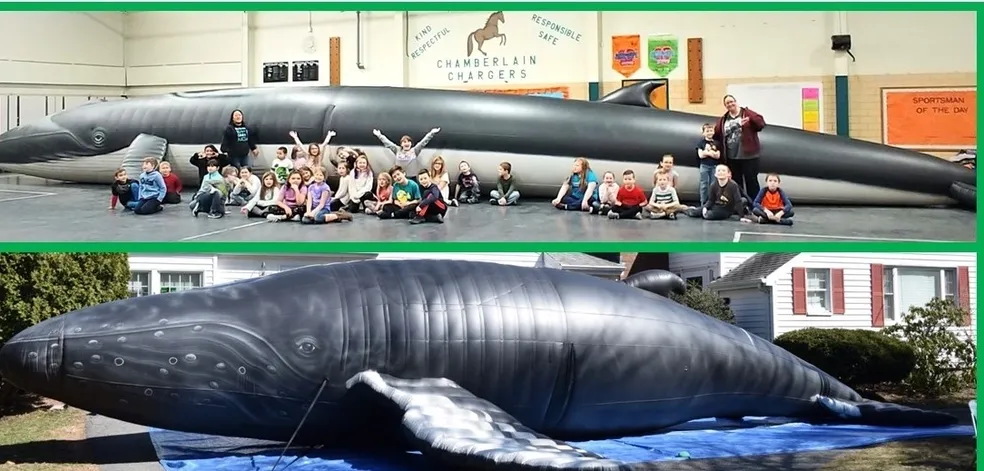
Every student begins inside Nile, our life-sized inflatable humpback whale. Surrounded by a realistic model of a whale’s internal anatomy, students can see the heart, lungs, ribs, stomach, and intestines as they discover how these structures help a whale survive in the ocean. During this 20-minute experience, our educators bring whale biology to life through stories, questions, and firsthand experiences from the field. Students explore how whales breathe and eat, how scientists study them, and the challenges whales face in the wild—and, of course, whale poop and how it helps the ocean and our planet.

What Students Will Learn
  • Whale internal anatomy
  • How whales breathe & eat
  • Ocean adaptations
  • How scientists study whales
  • Challenges whales face
  • Whale poop & ocean health
Outside the Whale: Grade Specific Activities

Outside the Whale: Grade Specific Activities

After exploring inside Nile, students take part in a hands-on activity designed for their grade level and connected directly to NGSS science standards.

K & 1st
K & 1st Grade

Do It, Do It

Students get to become whales! Through this active game, students eat, move, breathe, and communicate like whales while exploring what these animals need to survive. Depending on the group, our educators may also follow students’ curiosity into migration, communication, or whale social behavior.

K-LS1-1Use observations to describe patterns of what plants and animals (including humans) need to survive.
2nd
2nd Grade

Diversity of Life

How can animals look so different but live in the same habitat? Using models such as squid, whales, sharks, and sea turtles, students observe and compare how different ocean animals move, eat, and breathe. They discover how animals with very different body structures can share the same habitat.

2-LS4-1 Make observations of plants and animals to compare the diversity of life in different habitats.
3rd
3rd Grade

Survival 101

What does an animal need to survive? Using maps and animal models, students explore ocean habitats and discover how marine animals meet their needs for food, water, oxygen, shelter, and space. Along the way, they compare the different strategies animals use to survive and thrive in their environments.

3-LS2-1Construct an argument that some animals form groups that help members survive.
4th
4th Grade

Two Ways to Explore Whale Science

Choose one of two hands-on investigations!

Option 1: Whale Adaptations Through Time

How have whales changed over millions of years? Students examine models of ancient whale ancestors and modern whales, comparing body structures to discover how whales have changed over time and become adapted to life in the ocean.

Option 2: What a Fluke!

Every whale has a story—and its tail can help tell it! Students investigate photographs of real humpback whale flukes, using unique markings, scars, and other clues to identify individual whales and uncover stories about their lives.

4-LS1-1 Construct an argument that plants and animals have internal and external structures that function to support survival, growth, behavior, and reproduction.
5th
5th Grade

Ecosystems

What connects the sun, plankton, fish—and whale poop? Students build an ocean food web to trace how energy moves through the Gulf of Maine ecosystem. Along the way, they explore where plankton live, how nutrients move through the system, and how changes to one part of the food web can affect whales and the entire marine ecosystem.

5-PS3-1Use models to describe that energy in animals' food (used for body repair, growth, and motion and to maintain body warmth) was once energy from the sun. Click here to see what happens.
Booking Banner

Book for 2 years in a row and we will offer you 10% off next year's booking!

I'm in! →
Fish and Squid Dissections

Fish and Squid Dissections

Students examining a fish during a hands-on dissection activity In Person

Ready for Something Different?

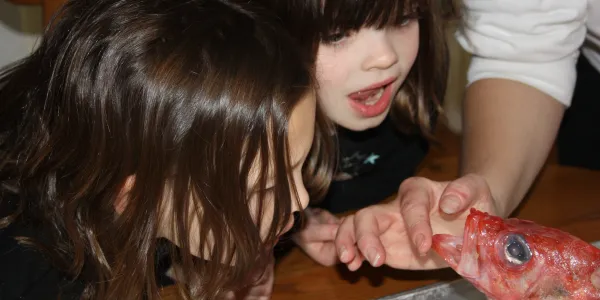
Take anatomy learning a step further with a hands-on dissection. Fish and squid dissections give students the opportunity to examine real structures, compare how different animals are built, and explore how form and function help animals survive.

Ask About Dissections & Pricing
We Have Programming For Everyone
🐋  All Ages Welcome

We have programming for everyone!

From kindergarten circle time to high school assemblies, every program is built to meet students exactly where they are.
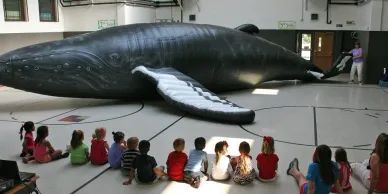
Middle school students inside the inflatable whale Grades 6–8

Middle schools

Take whale science deeper. Middle school students are never too old to step inside a whale! The experience becomes a springboard for deeper conversations about anatomy, adaptations, behavior, conservation, and how scientists study whales in the wild. Programs can be tailored to connect with what students are learning in class.

Middle school programs →
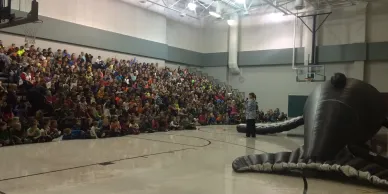
High school assembly with the inflatable whale Grades 9–12

High schools

Real-world science. Real-world issues. For high school students, we use whales as a lens for exploring biology, ecology, conservation, and current challenges facing marine ecosystems. Programs can be designed as interactive assemblies or tailored around specific topics—and yes, students still get a chance to experience the whale!

High school options →
Scroll to Top