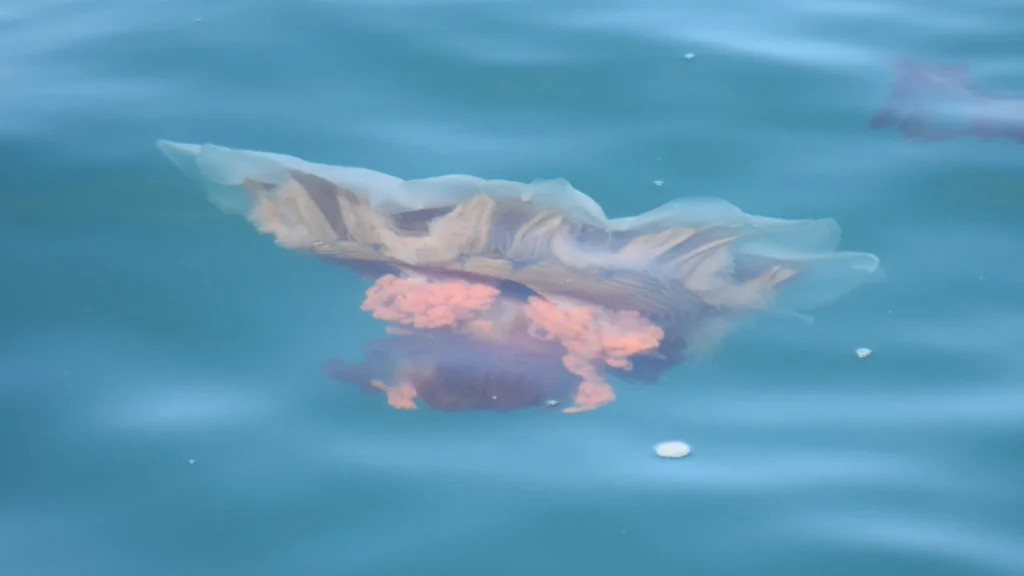
Why are jellyfish so good at school? Because they are always up to date on current events!
Wait a minute…jellyfish don’t go to school and they aren’t even fish! Unlike fish, jellyfish don’t have bones, a spine, or skeleton. This means they are invertebrates–animals without a backbone. Their bodies are made of mostly water, and they look like see-through umbrellas with long, flowing tentacles. Jellyfish are part of a special group called Cnidaria (nahy-dair-ee-uhn). The name cnidaria comes from the word “cnidae,” which means tiny stinging cells. Jellyfish use these stinging cells to catch their food and protect themselves.
Even though they are simple creatures, jellyfish have been around for millions of years. There are over 2,000 species of jellyfish that scientists have discovered, and scientists believe that there are thousands more living in the ocean that have yet to be found! With that said, let’s grab our goggles and dive deep into the world of one of the largest jellyfish species–the lion’s mane jelly:
Lion’s mane jellyfish (Cyanea capillata) get their name because of their long, flowing tentacles that look like the thick, shaggy mane of a lion! Lion’s mane jellyfish are one of the biggest jellyfish in the world. Their tentacles can grow up to 120 feet long–that is longer than a blue whale, the largest animal on earth! Their bell can grow over 6.5 feet wide. However, their size depends on where they live. Some grow huge in colder waters, while others stay much smaller. They live in cold, temperate, and subtropical waters around the world, and are not found in tropical waters.

These jellyfish are part of a special group called true jellies. True jellies are different from other jelly-like creatures because they have soft, bell-shaped bodies and go through a special life cycle that includes a baby stage called a polyp. Just like frogs and butterflies, the lion’s mane jellyfish goes through metamorphosis. These jellyfish are known as the holoplankton, which means they stay plankton their entire lives, always drifting with the ocean currents. Let’s take a quick look at their life cycle:
- Eggs & Larvae: A female lion’s mane jellyfish releases eggs, and when they hatch, these tiny babies are called planulae.
- Polyp stage: The planulae attach to rocks or seaweed and grow into a tiny shape called a polyp, which looks like a little plant.
- Ephyra: polyps make clones of themselves and release little baby jellyfish called ephyra into the water
- Medusa: The ephyra grow into the full adult jellyfish shape, called the medusa, with a big bell and long tentacles.
These jellyfish only live for about one year!
Lion’s mane jellyfish are hungry predators of the ocean. They use their long tentacles, covered in nematocysts (tiny stinging cells), to catch their food. When small fish, shrimp, or plankton swim too close, the nematocysts sting and paralyze them so the jellyfish can pull them in and eat them.
These jellyfish are usually solitary, meaning they like to be alone. But sometimes when there’s a lot of food and the conditions are right, they bloom and form huge groups of jellyfish floating together! In the Gulf of Maine, Lion’s mane jellyfish are often seen in the summer and fall, especially on our whale watches! The Whalemobile team has had many sightings of these jellyfish while out on whale watches. Sometimes we will see their predators such as sea turtles, ocean sunfish, and seabirds feeding on them and other times we will see them drifting along. One of our favorite moments was watching a humpback whale named Abyss play with a lion’s mane jellyfish on its head back in the year 2020! Stay tuned for Friday’s video to hear more about this silly and fascinating encounter!
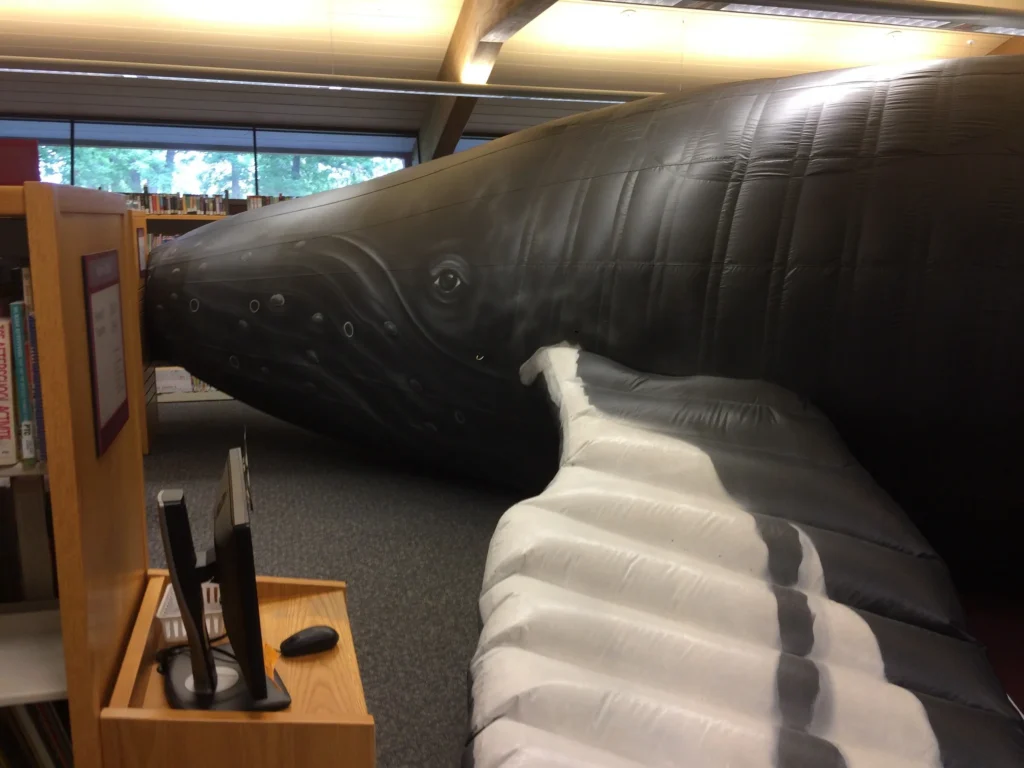
At The Whalemobile, we believe people protect what they understand—so we bring ocean science to life through stories, hands-on learning, and by bringing a life-sized whale in schools and libraries. To learn more about our programs, visit our website at www.thewhalemobile.com.