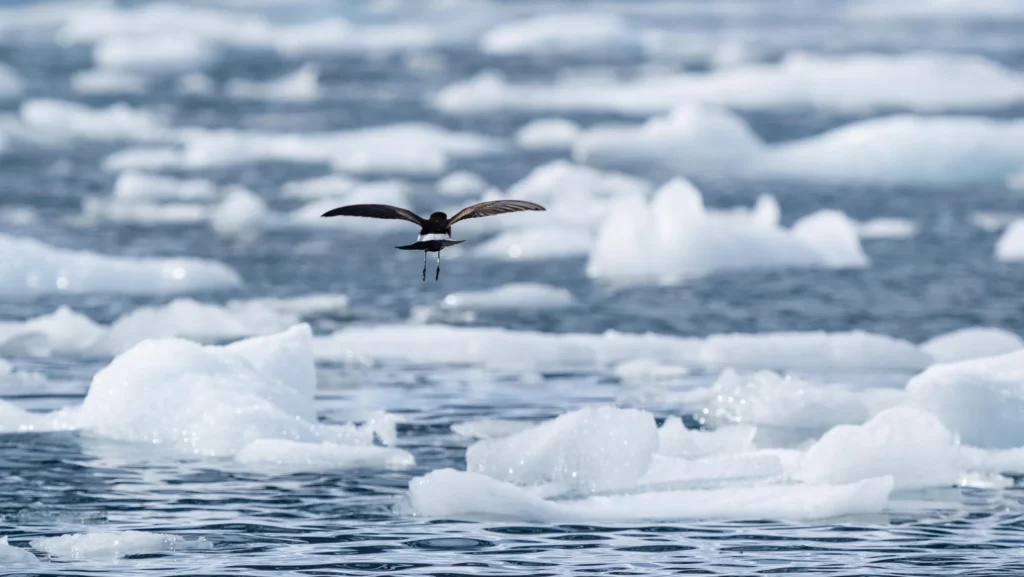
Welcome back, friends! We hope you enjoyed hearing all about our time in Turks & Caicos. As we’ve previously mentioned before, we are counting down the days until our whale watching season kicks off! Now, for those of you who have followed along with our entire ecosystem series or, if you’re just joining us now, we’ve already covered many different marine mammals, fish, and reptile species. But can you think of another type of animal that’s just as important for the ecosystem? You got it…seabirds! The Gulf of Maine is a major hotspot for many different seabird species that migrate through the area, and this week we’ll be focusing on the fascinating Wilson’s storm petrel!
Before we dive into learning all about Wilson’s storm petrels, we first need to understand what makes a seabird a “seabird.” True seabirds spend most of their lives at sea, often on the open ocean, and are especially adapted to life in the water. All seabirds have webbed feet and are highly migratory, traveling long distances. They tend to live long lives, and many only come to land to nest. With so many different species of seabirds, each one has its own unique role in the ecosystem!
The Wilson’s storm petrels (Oceanites oceanicus) are some of the most abundant seabirds in the world, and although they’re on the smaller side (roughly 7 inches from bill tip to tail tip), they are tough little birds! They are easy to recognize by their dark-colored feathers and a striking white patch on their rump, which stands out when they are flying. They also have short wings, a square-shaped tail, and long legs that help them skip across the ocean’s surface as they hunt for food. Have you ever tried to walk on water? That might sound like a silly question, but it’s actually how petrels got their name! Long ago, people noticed that these birds seemed to “walk” or “dance” on the surface of the water, hopping from wave to wave. The name “petrel” comes from the story of St. Peter, who was said to walk on water in old tales.

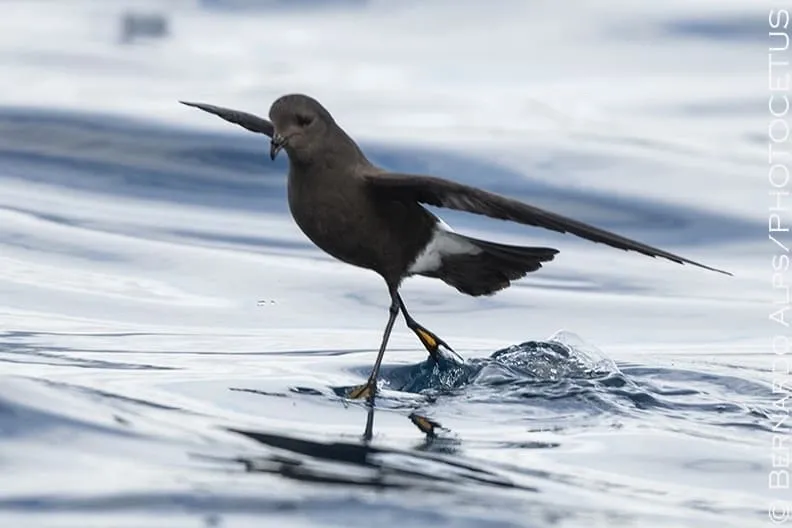
Wilson’s storm petrels belong to a group called Procellariiformes, also known as “tube-nose” birds. This is a special feature that looks like a little tube on their beak. Did you ever think about where these animals that live in the salty ocean get fresh water? They can’t drink the salt water that they live in, so many animals have adaptations to help them deal with the salt. The tube nose helps excrete excess salt AND gives them an amazing sense of smell, allowing them to sniff out food from miles away. It’s like having a built-in GPS for finding dinner!
These seabirds are known to be trans-equatorial migrants, which means they fly between the Northern and Southern hemispheres, covering huge distances. They breed south of the equator, where they nest on rocky slopes on islands off the coast of Argentina, Chile and Antarctica. They then travel far north to feed! Wait a minute…this migration between the southern breeding grounds and northern feeding grounds sounds familiar! (What other animals do this)? When these seabirds arrive to the Gulf of Maine, they’re often seen fluttering along the surface of the water, looking for plankton, krill, and small fish. They skim the surface of the water with their long legs, picking up these tiny creatures as they go. Do you remember any species in this ecosystem series that are also known as skim feeders?
Next time you’re near the ocean, keep your eyes peeled for these tiny adventurers. Stay tuned for next week’s fascinating seabirds!
At The Whalemobile, we believe people protect what they understand—so we bring ocean science to life through stories, hands-on learning, and by bringing a life-sized whale in schools and libraries. To learn more about our programs, visit our website at www.thewhalemobile.com.