A few weeks ago, we learned about Phytoplankton and our favorite rhyme, “we need whales because they poo, they help produce oxygen for me and you.” While discussing whale poop might seem silly at first, it actually reveals important insights into their diets. The baleen whales we study here in the Gulf of Maine typically produce brown feces, which suggests they are primarily feeding on schooling fish. However, on rare occasions, their waste appears red, indicating a diet rich in krill. Never heard of krill? Well, grab your seaweed snacks, and let’s dive into the fascinating world of krill—where size doesn’t matter, but the role they play in the ecosystem certainly does!
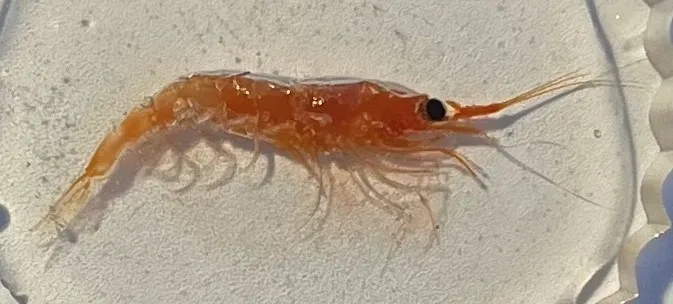
Similar to the copepods we learned about a few weeks ago, krill are a type of zooplankton, which means they are animals that can’t swim against strong currents like fish can. They’re usually about the size of a paper clip, measuring just 1 to 6 centimeters long! These little critters may be small, but they travel in huge swarms, often containing millions of them.
These shrimp-like crustaceans have an interesting life cycle that starts when females lay thousands of eggs in the water. Once these eggs hatch, the tiny larvae go through several stages as they grow (metamorphosis), eventually becoming adult krill. They are omnivores, which means they eat both plants and animals. Their vibrant orange-red hue is a result of the carotenoids in their diet, which primarily consists of their favorite snack–phytoplankton. But there’s something special about how krill find their food—they often engage in vertical migration, swimming up to the surface at night to munch on phytoplankton and then diving back down to avoid predators during the day. It’s like they have their own nighttime buffet!

In the deep, dark ocean, krill have a cool trick up their sleeves: they can make their own light! Some krill have special organs called photophores that glow in the dark. They use this bioluminescent light to confuse predators when they feel threatened or to attract friends when it’s time to mate. When krill swim up to the surface at night to munch on tiny plants, they can also use the faint light from their photophores to help them navigate and stay safe from bigger fish. It’s like having their very own flashlight in the deep sea!
There are about 85 species of krill, and they are packed with nutrients, making them an essential food source for many marine animals. These tiny creatures are rich in protein and omega-3 fatty acids, which are vital for the health of larger predators. For example, a blue whale, the largest animal on the planet, can eat up to 4 tons of krill in a single day! That is equivalent to YOU eating 32,000 quarter pound hamburgers in a day.
In the North Atlantic and the Gulf of Maine, the most common species of krill is Meganyctiphanes norvegica, also known as northern krill. These tiny crustaceans play a crucial role in the marine food web, serving as a primary food source for various marine animals, including baleen whales. However, they aren’t always spotted during whale watches because their populations can fluctuate based on environmental conditions, such as water temperature and nutrient availability. In fact, Cynde has only seen krill a handful of times during her 30 year whale watching career and this was Amanda and Kristin’s first time ever seeing krill in the wild! The end of June and early July there was a big influx of krill in the Gulf of Maine, specifically on southern Jeffreys Ledge. Do you have any ideas on why we had this big swarm of krill this year? Due to this event, and the predators that eat krill, what rare North Atlantic species do you think we saw on the 4th of July right off of Gloucester, Massachusetts (Hint: it was in the news)? Email us your ideas!
Michaela, another Whalemobile team member, got to see krill in Antarctica on one of her expeditions. Stay tuned for our video on Friday to learn more about our experiences!
Check out South Africa’s Dr. Kim Bernard, who has spent her research dedicated to Antarctic Krill.
Download the Krill Infographic
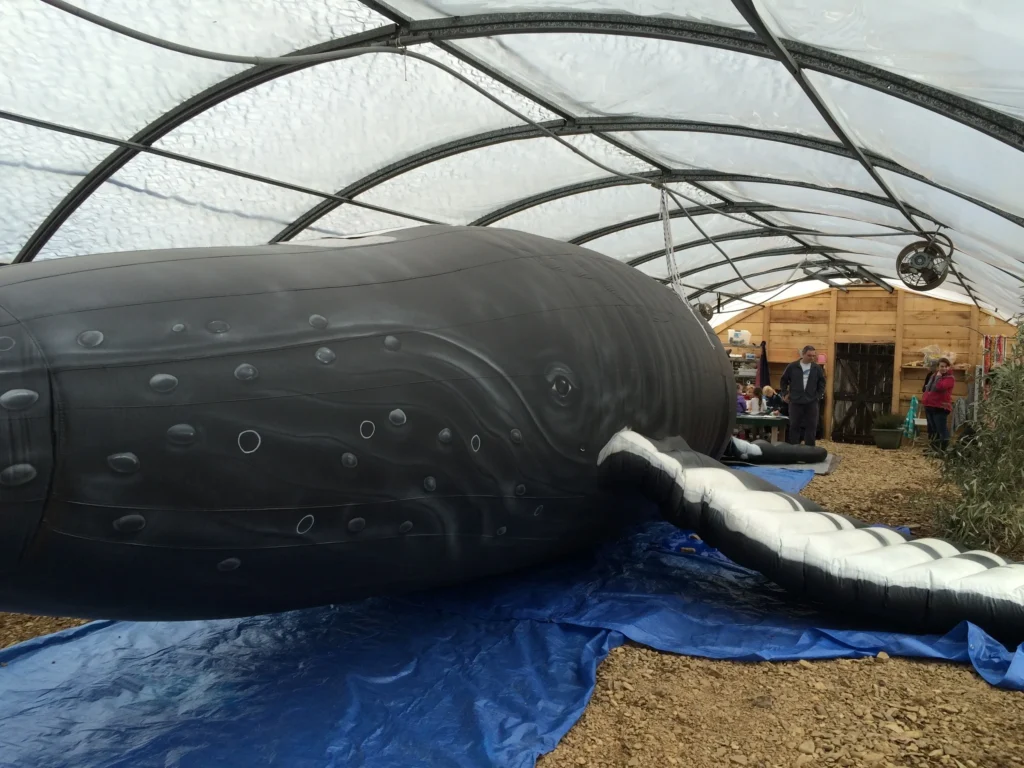
At The Whalemobile, we believe people protect what they understand—so we bring ocean science to life through stories, hands-on learning, and by bringing a life-sized whale in schools and libraries. To learn more about our programs, visit our website at www.thewhalemobile.com.