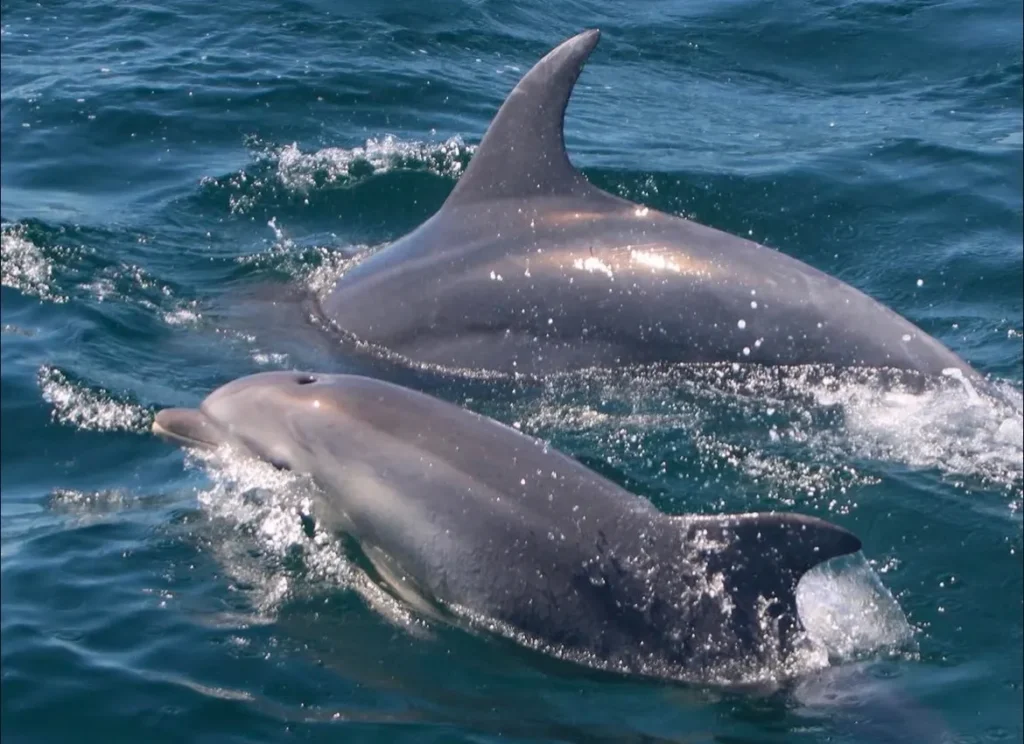
Happy New Year and welcome back to our ecosystem series! I want you to try this exercise with me. Close your eyes for a moment and picture a dolphin. What does it look like? Is it sleek and gray, gliding effortlessly through the sparkling blue water? Maybe it’s leaping high into the air and almost looks like it has a smile on its face. If that’s what you’ve imagined, you’re probably thinking of a bottlenose dolphin!
Bottlenose dolphins are one of the most famous dolphin species because they’ve been studied for over 50 years in aquariums, starred in TV shows and movies like Flipper, and amazed people with their high level of intelligence. You might picture bottlenose dolphins in warm tropical waters, but did you know they’ve been spotted right here in the Gulf of Maine? Let’s dive into some fascinating facts about these incredible creatures!
Common bottlenose dolphins (Tursiops truncatus) get their name for the shape of their beak, which resembles the shape of a bottle. Males are slightly bigger than females, and can be identified individually by their dorsal fins due to their distinct shapes, sizes, marks, and scars. Their size and coloration can vary significantly depending on the population, with coastal (inshore dolphins) typically being smaller and lighter in color, while offshore dolphins are generally larger and darker to better adapt to their specific habitats.

Bottlenose dolphins are incredibly adaptable and have a broad range. While they are commonly associated with tropical and subtropical waters, they actually inhabit temperate regions as well. Their range extends across oceans and seas worldwide, including coastal and offshore environments. In cooler temperate waters (such as the Gulf of Maine), they often have a more robust body shape and a thick layer of blubber to help insulate them against the colder temperatures. Can you think of other species in our ecosystem series that you’ve read about that has a thick blubber layer?
While bottlenose dolphins are in the Delphinidae (dolphin) family, they are known as odontocetes or toothed-whales. Toothed whales are known to travel in pods, and communication is a key aspect of their lives. Bottlenose dolphins use clicks, whistles, and body language to coordinate group activities. These dolphins can even identify one another using unique signature whistles, which is similar to us having our own distinct voices or names!
Many bottlenose dolphins are generalist feeders, adapting their diet to a wide range of prey. Some groups are considered specialists based on their population and habitat. Inshore populations favor fish and invertebrates, while offshore dolphins prefer squid and deep-water fish. Their intelligence shines through in feeding techniques like fish herding, where they corral prey into tight groups, and strand feeding, intentionally beaching themselves to catch fish. Offshore dolphins may also dive to great depths (over 1,000 feet) to hunt.
While sightings of common bottlenose dolphins are relatively rare for whale watchers here in the Gulf of Maine, The Whalemobile team has had a few exciting encounters in recent years. The most recent sighting occurred this past summer when bottlenose dolphins were observed alongside long-finned pilot whales, Atlantic white-sided dolphins, and common dolphins. As we learned in the blogpost, long-finned pilot whale’s primarily feed on cephalopods (such as squid), and based on what we have learned about bottlenose dolphins, can you make a guess as to whether they were part of an inshore or offshore population? Email us and let us know what you think!
Check out this article where Marine Biologist Laela Sayigh discovered that female bottlenose dolphins modify their “signature whistles” to sound like “baby talk” to communicate with their calves:
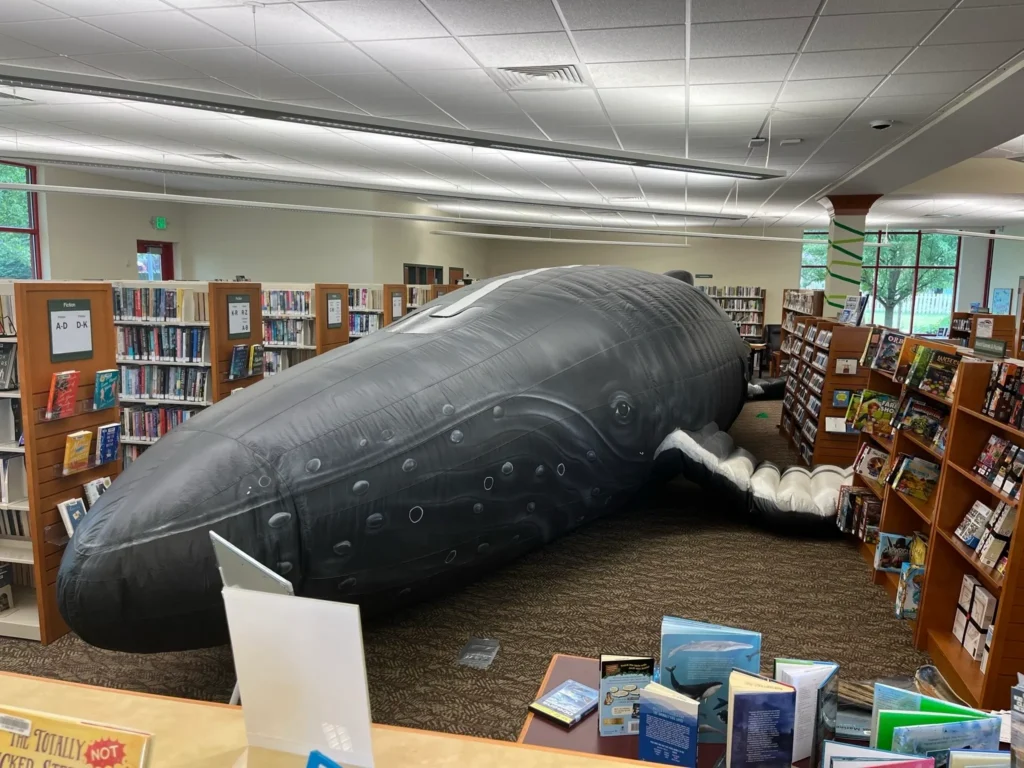
At The Whalemobile, we believe people protect what they understand—so we bring ocean science to life through stories, hands-on learning, and by bringing a life-sized whale in schools and libraries. To learn more about our programs, visit our website at www.thewhalemobile.com.