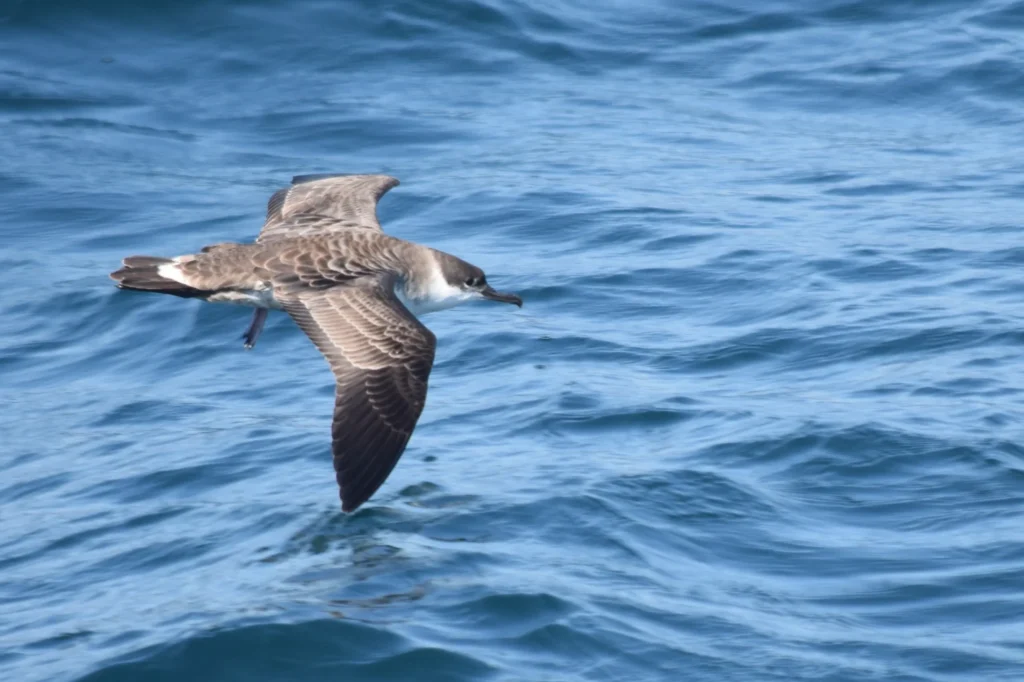
Why did the shearwater bring a map to the party? Because it is never “shore” of its next adventure! We love cheesy jokes to grab your attention! Have you ever heard of a shearwater? There are four species you could possibly encounter in the Gulf of Maine. These seabirds are medium sized, super cool, and always off on new adventures. They’re called ‘shearwaters’ because of the way they glide so smoothly over the water, almost shearing the surface with their stiff, shallow wingbeats. Shearwaters belong to the same Procellariidae family as the Wilson’s storm petrel we learned about last week. Identifying different bird species can be tricky, especially when you’re on a moving vessel. Let’s take a closer look at the four species of shearwaters you might encounter in the Gulf of Maine:
Greater Shearwater (Ardenna gravis):
These are the most common shearwater seen in the GOM
Length: 18 inches
Wingspan: 42 inches
Coloration: Dark above, black cap, white throats and undersides, white stripe on tail
Nesting: South Atlantic on Tristan da Cunha islands between South America and South Africa
Sooty Shearwater (Ardenna grisea)
Second most common shearwater seen in the GOM
Length: 17 inches
Wingspan: 40 inches
Coloration: charcoal-grey, uniformly colored, silver under wings
Nesting: Southern Hemisphere; Argentina and Antarctica (will travel 40,000 miles in a year!)
Fun fact: Can dive to depths of 220 feet!
Manx Shearwater (Puffinus puffinus)
Smallest and least common shearwater
Length: 13 inches
Wingspan: 35 inches
Coloration: dark back and white underside
Nesting: Eastern North Atlantic; United Kingdom
Fun Fact: Have very fast wingbeats!
Cory’s Shearwater (Calonectris borealis)
Largest of the four shearwaters mentioned
Length: 19 inches
Wingspan: up to 50 inches
Coloration: light brown top, white throat. Distinct bright yellow bill
Nesting: Eastern North Atlantic and Mediterranean
Fun Fact: Prefer warmer waters…used to be rare but the warming waters in the GOM have brought in more and more each year
What Do Shearwaters Eat?
Shearwaters love seafood! In the Gulf of Maine, their favorite snacks include schooling fish like herring and sand lance, as well as squid and other tiny sea creatures. They are incredible divers, using their strong wings to propel themselves underwater to catch food. Sometimes, they even follow whales, dolphins, or big schools of fish, taking advantage of the chaos to grab a quick bite!

Why Are They Important?
Shearwaters play a big role in the ocean’s food web. By eating fish and squid, they help keep populations balanced, making sure no one species takes over. And guess what? When shearwaters dive and stir up the water, they actually help other animals find food too! They are a key part of the ocean’s ecosystem, keeping everything in harmony.
Do Shearwaters Have Predators?
Even though shearwaters are speedy and spend most of their lives at sea, they do have predators. Big birds like gulls might try to steal their food, and some larger seabirds could go after them. On land, where shearwaters nest, animals like rats or foxes can be a danger to their eggs and chicks. That’s why shearwaters usually pick safe, hidden places to raise their families.
The Ocean Needs Shearwaters!
Shearwaters are not just cool birds—they are an important part of the ocean world. By helping to control fish and squid populations and sharing food with other creatures, they keep the Gulf of Maine a healthy place for marine life. So, next time you’re near the sea, keep an eye out for these awesome birds, and remember how special they are to the ocean’s food web!
Check out the Stellwagen Bank National Marine Sanctuary’s (SBNMS) Shearwater Tagging Project.
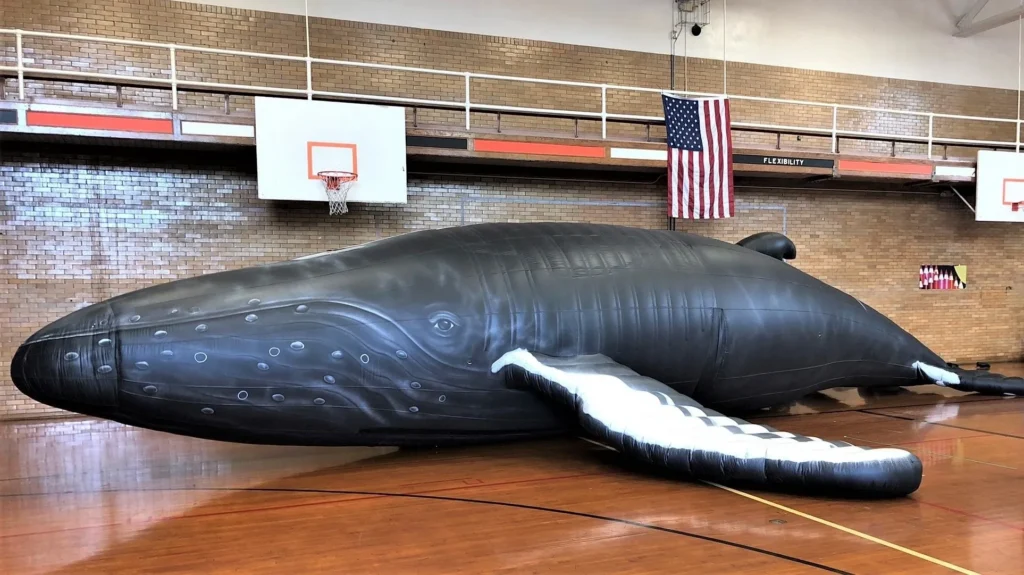
At The Whalemobile, we believe people protect what they understand—so we bring ocean science to life through stories, hands-on learning, and by bringing a life-sized whale in schools and libraries. To learn more about our programs, visit our website at www.thewhalemobile.com.