 In the Gym
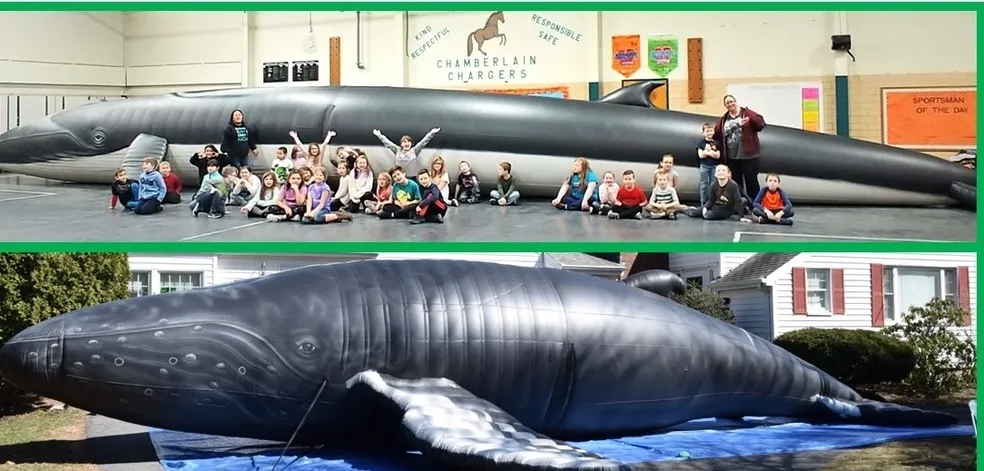 Full Inflation
4th Grade W.H.A.L.E. Program
Whales, Habitats, Anatomy, Life Sciences, and Environment.
The Whalemobile and Blue Ocean Society are partnering to bring whales into your classroom for a year!
- Whales & Habitats
- Anatomy
- Life Sciences
- Environment
4 In-Person Visits
Four hands-on classroom and gym visits that build on each other throughout the year—from measurement to marine debris.
How Big is a Whale?
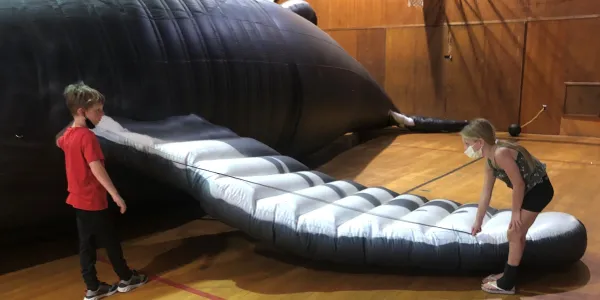
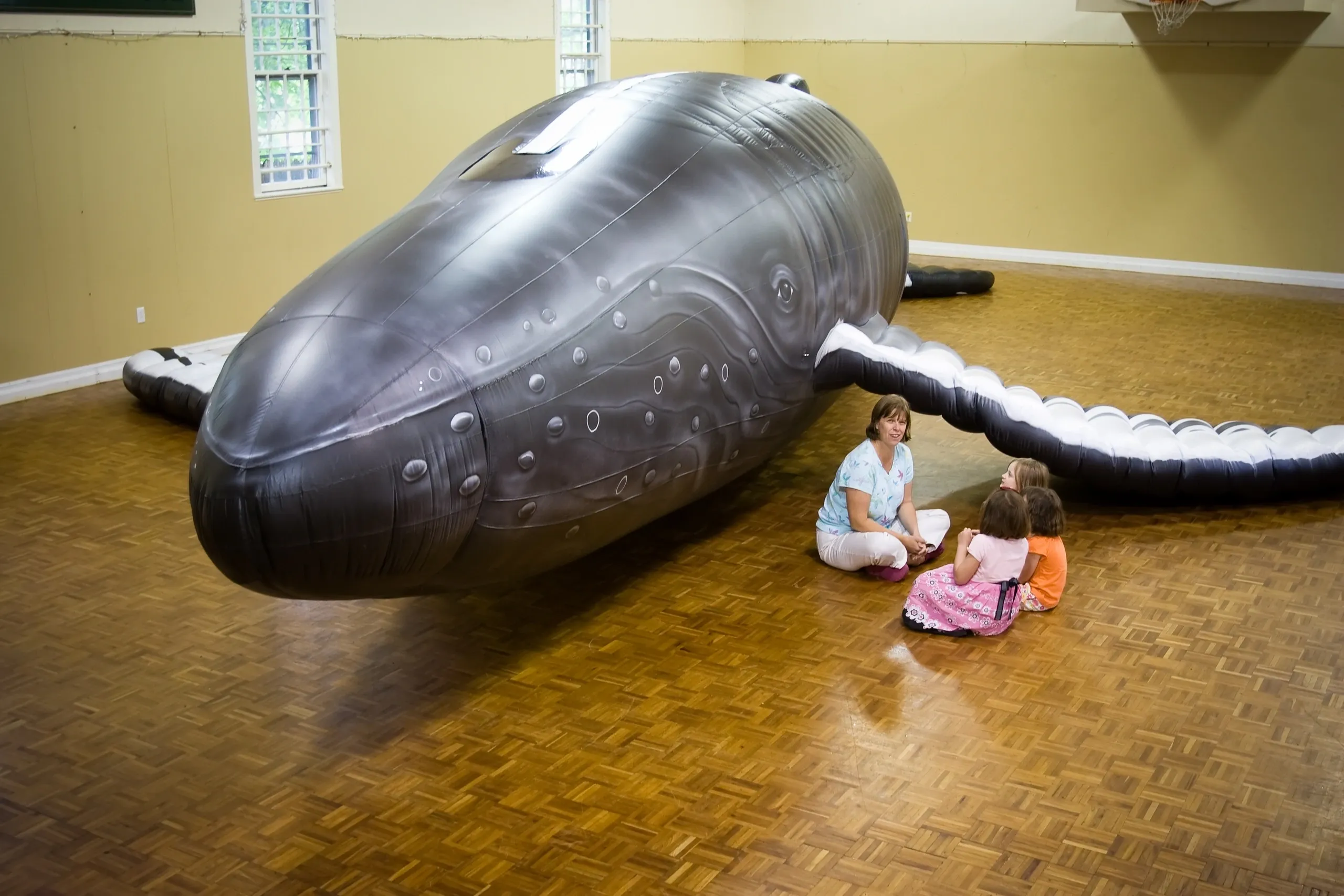
Using our two life-sized inflatable whales, a humpback and fin whale, we will focus this visit on math! In teams and using different instruments, students will measure and compare parts of both a fin whale and a humpback whale—their flippers, their tail, their length, and their circumference. They will then use that data to generate averages and discuss which units you might use to measure different body parts.
We will introduce concepts that are used in science to quantify data—mean, median, mode and range. This visit will take place in the gym, one class at a time. Follow up activities will utilize different whale species while exploring fractions.
Whales: Inside and Out
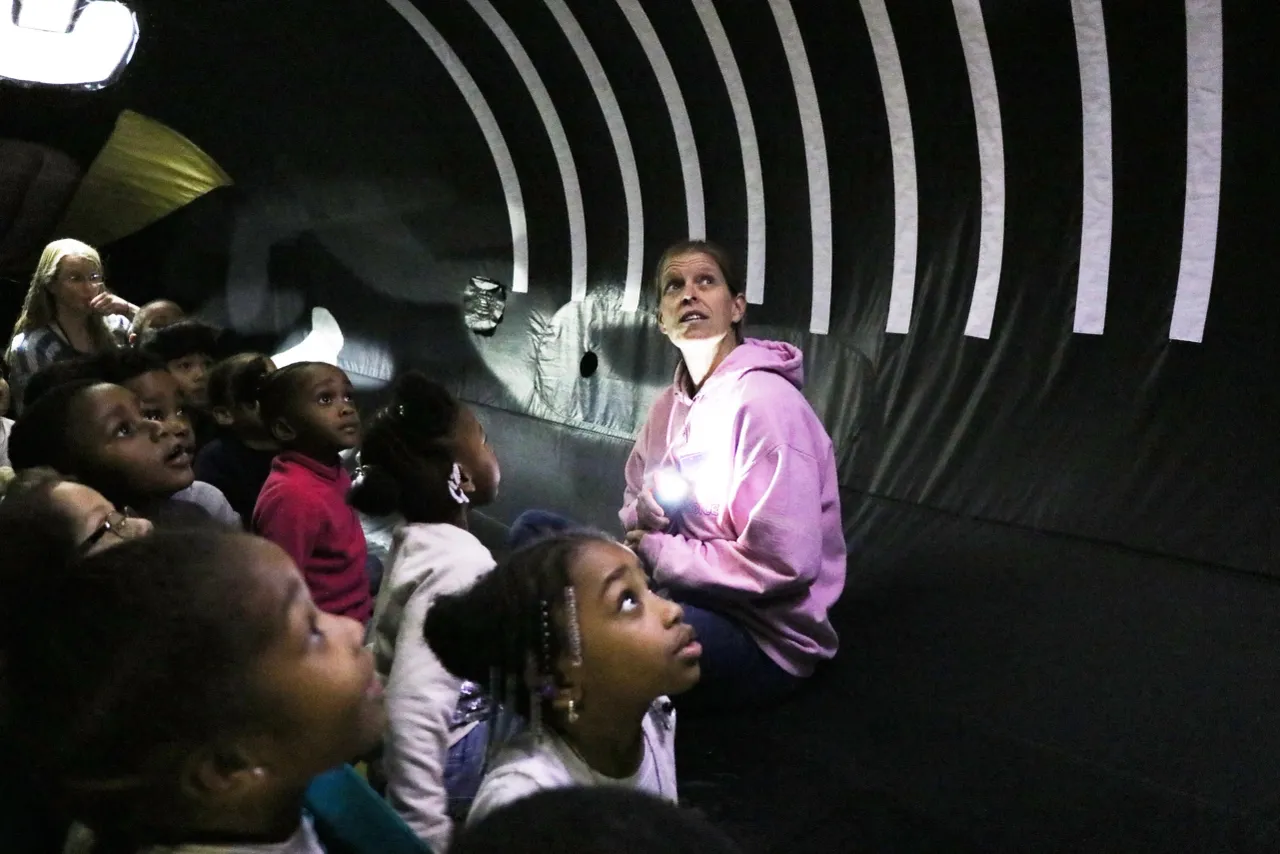
This visit will expand on form and function as we go inside an inflatable whale and talk about their internal body parts and compare them to ours!
We then will explore the outside of the whale and see if we notice signs of human interaction. What happened to the whale? How can we prevent it from happening in the future? (Depending on which whale is used, we will discuss vessel strikes or entanglement in fishing gear—the two major threats that whales face today.) Students will be challenged to come up with a solution to the problem. They can further develop their solutions through an in-class project and present their solutions to us virtually at a later date.
Form and Function
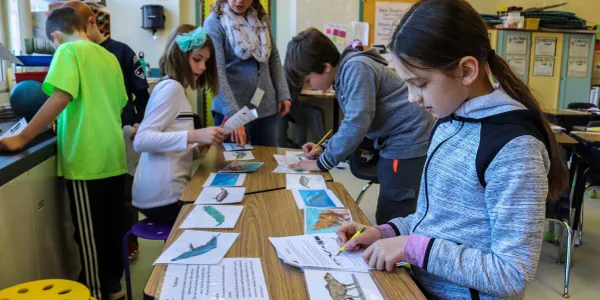
This visit will focus on the animals' bodies. Students will move through 4 stations around the classroom to explore blubber, evolution, and the differences between baleen and teeth, and fish and whales. We will then come together to articulate what we learned and evaluate where we might find different animals based on some of these characteristics.
Marine Debris and Microplastics
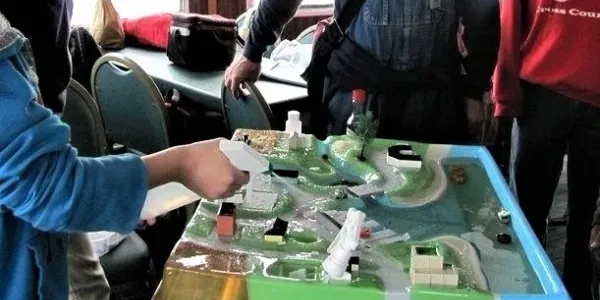
Students will break into two groups and “talk trash”. One group will explore how trash becomes marine debris and why we see certain types of trash more than others. The other will be doing an activity focused on microplastics. We will switch activities and then come together to debrief what we observed and learned.